
Lake Baikal
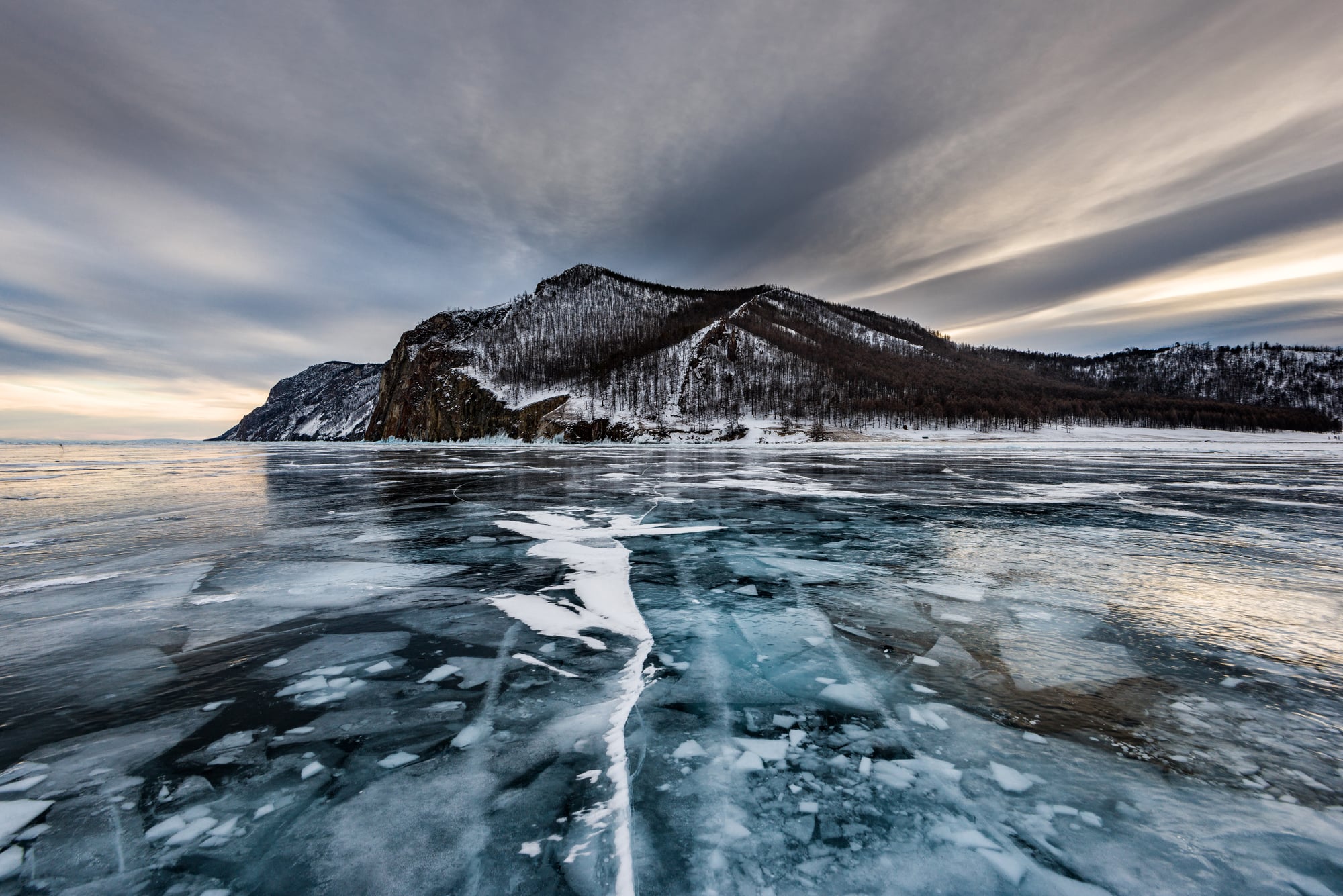
Credit: Sergey Pesterev · CC BY-SA 4.0
Lake Baikal is a huge freshwater lake in southern Siberia, in the country of Russia. It is the deepest lake in the world and also the oldest. Scientists think Baikal formed about 25 million years ago, long before most other lakes on Earth existed. Most lakes fill in with mud and disappear after a few thousand years. Baikal has lasted thousands of times longer.
The lake is shaped like a long, curved crescent. It stretches about 395 miles from end to end, which is longer than the state of Ohio is wide. At its deepest point, the bottom lies 5,387 feet below the surface. That is more than a mile straight down. If you dropped the Empire State Building into Baikal, the water would cover it with room to spare.
Baikal sits inside a giant crack in Earth's crust called a rift valley. Two of Earth's tectonic plates are slowly pulling apart here, and the land between them keeps sinking. The lake gets a little deeper and a little wider every year. In a few million years, some geologists think the rift could grow into a new ocean.
Because Baikal is so old and so isolated, strange animals have evolved there. More than 1,700 species of plants and animals live in the lake, and about two-thirds of them are found nowhere else on Earth. The most famous is the Baikal seal, or nerpa. It is the only seal in the world that lives its whole life in fresh water. Scientists are still not sure how its ancestors got so far inland from the Arctic Ocean.
The water itself is famous too. Tiny shrimp-like creatures called amphipods eat algae and dead material from the water, keeping it clean. In many spots, you can see 130 feet straight down into the lake. In winter, the surface freezes into clear ice so thick that trucks drive across it. The ice often cracks into strange blue patterns that photographers come from around the world to see.
People have lived around Baikal for thousands of years. The Buryat, an Indigenous people of Siberia, consider the lake sacred and tell stories about the spirits who live in it. Today, Baikal faces real threats. Pollution from nearby factories and a warming climate are hurting the lake's famous clear water. In 1996, the United Nations named Baikal a World Heritage Site to help protect it.
Related
Last updated 2026-04-23