
Everglades
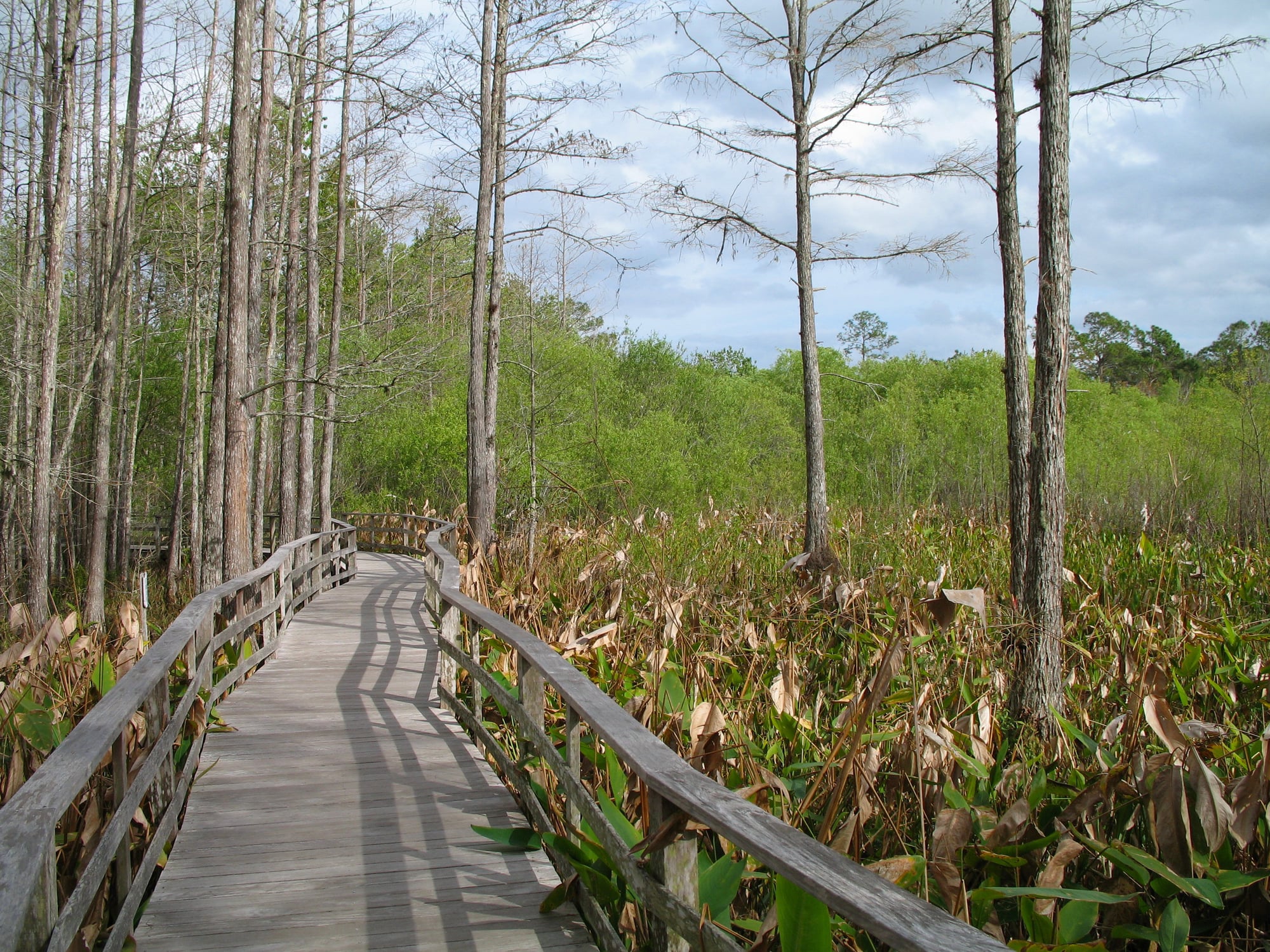
Credit: Marc Ryckaert (MJJR) · CC BY 2.5
The Everglades is a huge wetland in southern Florida. A wetland is a place where the land stays wet most or all of the year. The Everglades covers about 1.5 million acres, which is larger than the state of Delaware. Most of it is protected as Everglades National Park, created in 1947.
People sometimes call the Everglades a swamp, but it is really a slow-moving river. The water is very wide and very shallow. In some places it stretches 60 miles across but only a few inches deep. The water creeps south from Lake Okeechobee down to Florida Bay. It moves so slowly that you cannot see it flow. The Seminole people who lived here gave it a fitting name: Pa-hay-okee, meaning "grassy water."
Most of the Everglades is covered in sawgrass. Sawgrass looks like tall grass but has sharp little teeth along its edges. Mixed into the sawgrass are small islands of trees called hammocks, as well as mangrove forests near the coast and pine forests on higher ground. Each of these places is home to different animals.
The Everglades is famous for its wildlife. American alligators float in the water with just their eyes showing. American crocodiles live in the salty water near the coast. The Everglades is the only place on Earth where both live together in the wild. Manatees swim in the warm bays. Pink wading birds called roseate spoonbills sweep their bills through the shallow water looking for food. The Florida panther, a kind of cougar, hunts in the pine forests. Only about 200 of these panthers are left in the wild.
The Everglades is in trouble. In the 1900s, people drained large parts of it to build farms, roads, and cities like Miami. Canals were cut to move water away from the land. Pollution from farms flowed into the water. Plants and animals from other parts of the world, like the Burmese python, were set loose and began eating native wildlife. Today the Everglades is about half the size it was 100 years ago.
Scientists and the government are working on one of the biggest repair projects in history to save it. The plan is to fix the flow of water and clean up the pollution. Progress is slow, and experts disagree about which steps will work best. Everyone agrees on one thing: if the slow river disappears, so does everything that depends on it.
Last updated 2026-04-23