
Winston Churchill
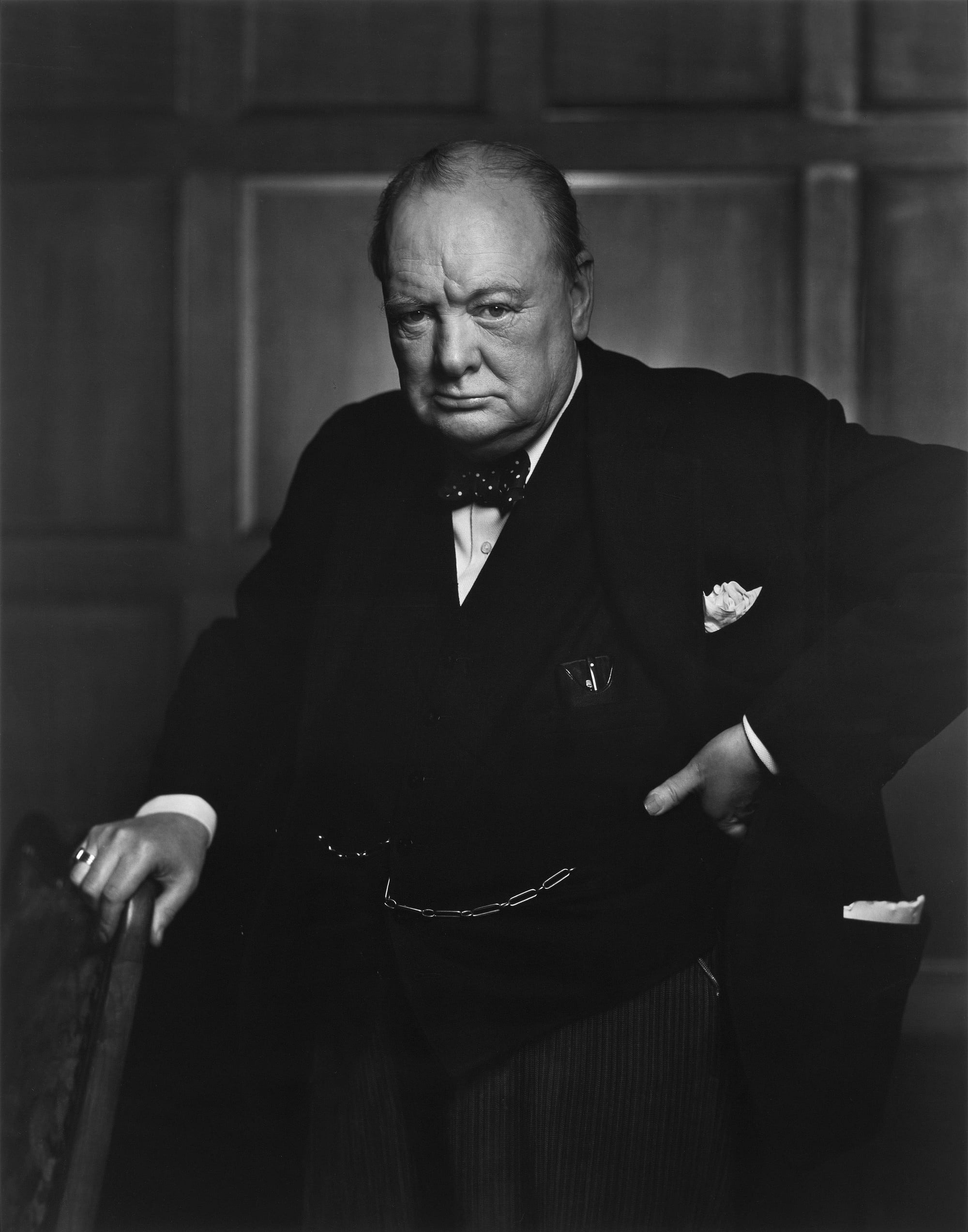
Credit: Yousuf Karsh · Public domain
Winston Churchill was a British politician and writer who served as Prime Minister of the United Kingdom during most of World War II. He lived from 1874 to 1965. He is best remembered for leading Britain during the years when Nazi Germany seemed unstoppable. His speeches helped keep his country fighting when many people thought the war was already lost.
Churchill was born into a wealthy English family at a grand house called Blenheim Palace. As a young man he served in the British Army and worked as a war reporter. He fought in India, Sudan, and South Africa. In South Africa, enemy soldiers captured him, but he escaped by climbing a wall and hiding on a freight train. The story made him famous back home.
He was elected to Parliament in 1900, when he was just 25 years old. Over the next 40 years he held many government jobs. Some of his decisions went badly. During World War I, he planned an attack on Turkey at a place called Gallipoli that ended in disaster. Tens of thousands of soldiers died. Churchill was blamed and pushed out of his job.
In the 1930s, most British leaders hoped to avoid another war. Churchill disagreed. He warned again and again that Adolf Hitler and Nazi Germany were dangerous. Few people listened. Then in 1939, Germany invaded Poland and World War II began. By May 1940, German armies had overrun much of Europe. Britain needed a new prime minister, and Churchill got the job.
He took office at one of the darkest moments in British history. France fell to Germany within weeks. Britain stood almost alone. Churchill refused to make peace with Hitler. In a famous speech to Parliament he promised "blood, toil, tears and sweat." He told the British people they would fight on the beaches and never surrender. His radio speeches reached millions of listeners and helped hold the country together through bombing raids on London called the Blitz.
Britain, the United States, and the Soviet Union finally defeated Germany in 1945. That same year, British voters surprised the world by removing Churchill from office. They wanted new leaders to handle peacetime problems. He returned as prime minister from 1951 to 1955.
Churchill was also a serious writer. He won the Nobel Prize in Literature in 1953 for his books on history. Historians today still debate his record. They praise his wartime leadership but criticize his support for the British Empire and his harsh views toward people in India and Africa.
Related
Last updated 2026-04-26