
Sojourner Truth
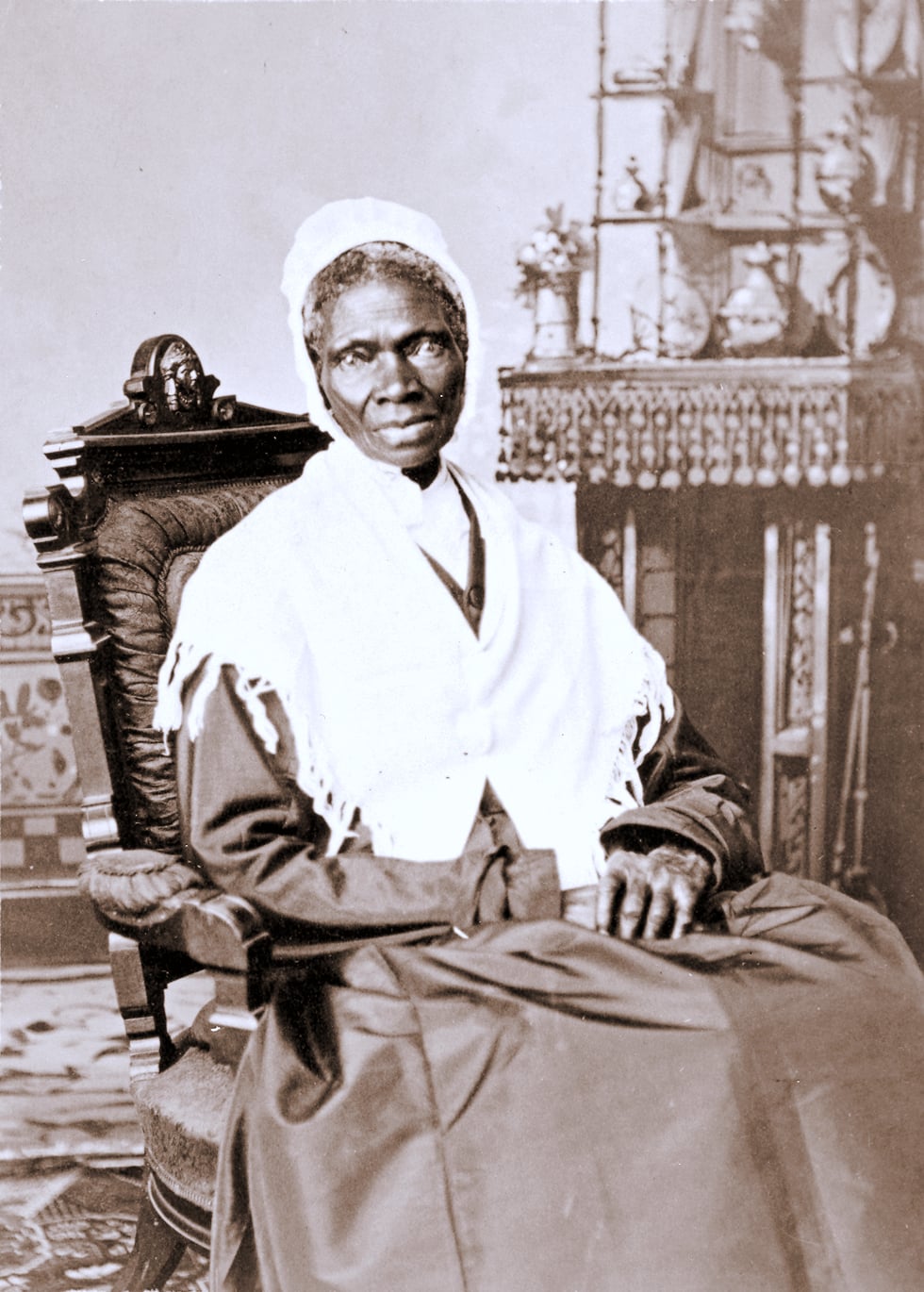
Credit: Randall Studio · Public domain
Sojourner Truth was an American activist who fought to end slavery and to win equal rights for women. She lived from about 1797 to 1883. She was one of the most powerful speakers of her time, even though she could not read or write. Today she is remembered as one of the bravest voices in American history.
She was born Isabella Baumfree in Ulster County, New York. Her first language was Dutch, because the family that owned her spoke Dutch at home. She was sold away from her parents when she was about nine years old. Over the next twenty years, four different people owned her. She was beaten, forced to work long hours, and forced to marry an older enslaved man.
In 1826, New York was about to end slavery. The man who owned Isabella promised to free her early, then broke his promise. So she walked away with her baby daughter and found shelter with a Quaker family who bought her freedom for twenty dollars. Soon after, she learned that her young son Peter had been illegally sold to a man in Alabama. Isabella took the case to court and won. She became one of the first Black women in America to win a court case against a white man.
In 1843, she felt called by God to travel and preach. She gave herself a new name: Sojourner Truth. A "sojourner" is someone who travels from place to place. She walked across the Northeast and Midwest, speaking against slavery and for the rights of women. Her voice was deep and strong, and large crowds came to hear her.
In 1851, she gave a famous speech at a women's rights meeting in Akron, Ohio. She spoke about the hard work she had done as an enslaved woman and asked why women were called weak. The speech is often called "Ain't I a Woman?" Historians debate the exact words, because the most famous version was written down years later by a white editor who changed her speech patterns. The shorter version printed soon after the meeting is probably closer to what she actually said.
During the Civil War, Truth helped recruit Black soldiers for the Union Army. After the war, she worked to help formerly enslaved people find jobs, homes, and education. She met President Abraham Lincoln at the White House in 1864.
Truth died in 1883, in Battle Creek, Michigan. Her face now appears on stamps and statues. In 2009, a bust of her was placed in the United States Capitol, the first statue there to honor a Black woman.
Related
Last updated 2026-04-26