
Queen Victoria
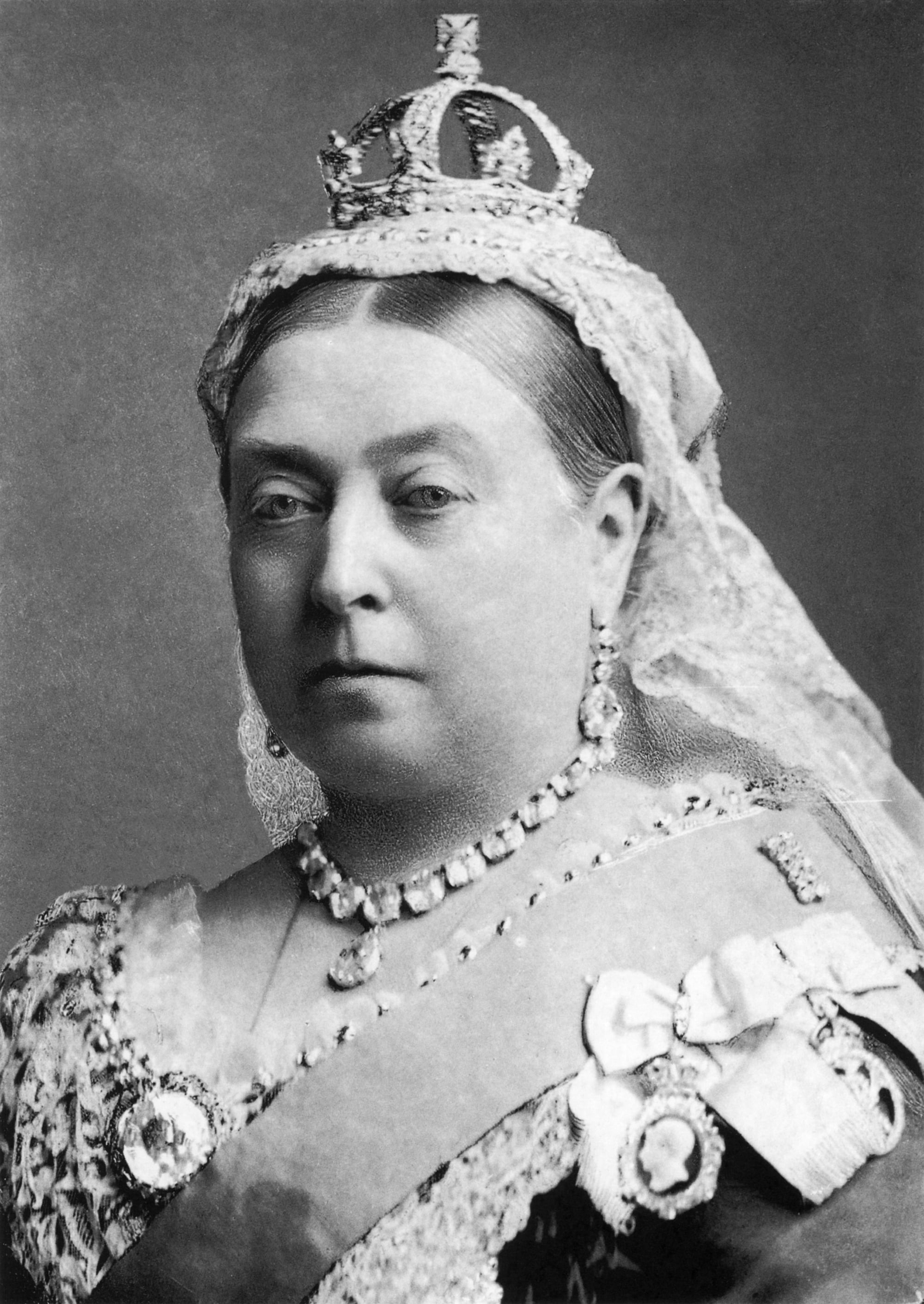
Credit: Alexander Bassano · Public domain
Queen Victoria was the queen of the United Kingdom from 1837 to 1901. She lived from 1819 to 1901, and her 63-year reign was the longest of any British monarch up to that point. The years she ruled are now called the Victorian era. During this time, Britain became the most powerful country in the world, with an empire that stretched across every continent.
Victoria became queen at age 18. Her uncle, King William IV, died with no surviving children, so the crown passed to her. She was small, only about five feet tall, but she had a strong will. On her first morning as queen, she met with her advisors alone. She wanted to make clear that she would be in charge.
In 1840, Victoria married her cousin, Prince Albert of Germany. The marriage was happy, and the two became partners in running the country. They had nine children together. Victoria's children later married into royal families across Europe, which is why she is sometimes called "the grandmother of Europe." Many of today's European royals are her descendants.
Albert died in 1861, when Victoria was only 42. She was crushed by his death. She wore black mourning clothes for the rest of her life, almost 40 years. For many years, she barely appeared in public. Some people in Britain wondered if the country still needed a queen at all.
Victoria's reign covered huge changes. The Industrial Revolution filled British cities with factories, railways, and steam engines. Trains, the telegraph, and later the telephone connected places that had once felt far apart. At the same time, the British Empire grew enormous. By the end of her reign, Britain ruled about a quarter of the world's land and people, including India, large parts of Africa, Canada, Australia, and many islands. In 1876, Victoria was given a new title: Empress of India.
Historians today look at her reign with mixed feelings. Britain grew rich and powerful, but that power often came at a heavy cost to the people Britain ruled. In India, Africa, and elsewhere, British rule meant lost land, lost rights, and sometimes deadly famines. The empire she sat at the top of is now seen very differently than it was during her lifetime.
Victoria died on January 22, 1901, at age 81. Her son Edward took the throne. By then, an entire age was named after her, and the world she left behind looked nothing like the one she had been born into.
Related
Last updated 2026-04-26