
George Washington Carver
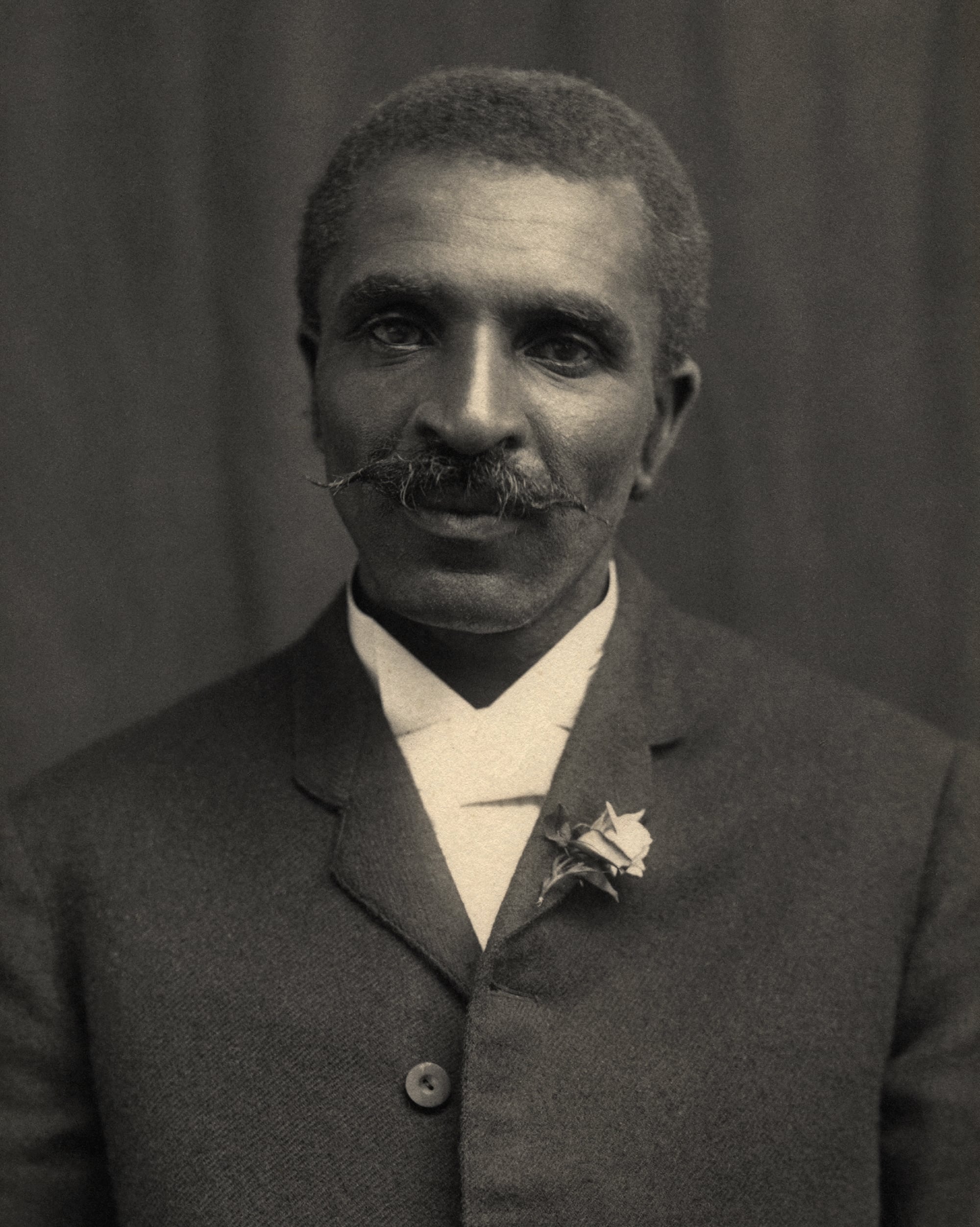
Credit: Adam Cuerden · Public domain
George Washington Carver was an American scientist who studied plants and changed the way farmers grew food in the South. He lived from about 1864 to 1943. He is most famous for his work with peanuts, sweet potatoes, and soybeans. He spent most of his career as a teacher and researcher at the Tuskegee Institute, a college in Alabama for Black students.
Carver was born into slavery on a farm in Missouri near the end of the Civil War. His exact birth year is not known. As a baby, he and his mother were kidnapped by raiders. The family that had owned them got Carver back, but his mother was never found. After slavery ended, the farm's owners raised him and his brother as part of their household.
Carver loved plants from the time he was small. Neighbors called him "the plant doctor" because he could nurse sick gardens back to health. He walked many miles to attend schools that accepted Black students. He earned a master's degree in agriculture from Iowa State in 1896. He was the first Black student and the first Black teacher at that school.
That same year, Booker T. Washington invited Carver to lead the agriculture program at Tuskegee. Carver stayed there for the rest of his life. The South had a serious problem when he arrived. Farmers had grown cotton in the same fields year after year. Cotton pulls important nutrients out of the soil. After many seasons, the land was worn out and crops were failing.
Carver taught farmers to plant peanuts, sweet potatoes, and soybeans in some years instead of cotton. These plants put nitrogen back into the soil. The trick is called crop rotation. It worked. Soil got healthier and harvests grew. But farmers ended up with mountains of peanuts and no one to buy them.
So Carver got to work in his lab. He found hundreds of new uses for peanuts and sweet potatoes, including flour, dyes, glue, and cooking oil. He shared his ideas for free in simple bulletins that any farmer could read. He never patented most of his inventions. He believed knowledge that helped people should belong to everyone.
Carver became one of the most famous scientists in America. He spoke before Congress and exchanged letters with presidents and inventors like Thomas Edison. When he died in 1943, he left his life savings to Tuskegee to keep his research going. His childhood home in Missouri became the first national monument honoring a Black American.
Related
Last updated 2026-04-26