
Elizabeth Cady Stanton
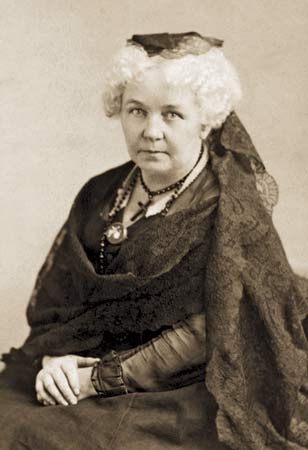
Credit: Unknown author · Public domain
Elizabeth Cady Stanton was an American writer and activist who led the fight for women's rights in the United States. She lived from 1815 to 1902. For more than 50 years, she pushed for women to have the same legal rights as men, including the right to vote. She did not live to see women win that right, but the movement she helped start eventually did.
She was born Elizabeth Cady in Johnstown, New York. Her father was a judge, and as a girl she read law books in his office. She noticed that the laws treated women unfairly. A married woman could not own property, keep her own wages, or sign a contract. If she got divorced, she usually lost her children. These laws made Elizabeth angry, and she remembered them for the rest of her life.
In 1840, she married a lawyer named Henry Stanton. On their honeymoon, they went to a big anti-slavery meeting in London. The men running the meeting refused to let women speak or sit with the men. Stanton was furious. There she met another American woman named Lucretia Mott. They promised each other that someday they would hold a meeting about women's rights.
Eight years later, they kept that promise. In July 1848, Stanton and Mott organized the Seneca Falls Convention in upstate New York. About 300 people came. Stanton wrote the main document, called the Declaration of Sentiments. She copied the style of the Declaration of Independence on purpose. It said, "all men and women are created equal." It also listed 18 ways American laws and customs were unfair to women. The boldest demand was that women should be allowed to vote. Many people, even some friends, thought she had gone too far.
In 1851, Stanton met Susan B. Anthony, and the two became lifelong partners in the cause. Stanton was the writer who shaped ideas and speeches. Anthony was the traveler who delivered them across the country. Together they led the National Woman Suffrage Association for decades.
Stanton also pushed ideas that other reformers thought were too radical. She wanted easier divorce laws. She criticized parts of the Bible that she said were used to keep women down. These views split the movement, and many people turned away from her in her later years.
She died in 1902, 18 years before American women finally won the right to vote in 1920.
Related
Last updated 2026-04-26