
Drought
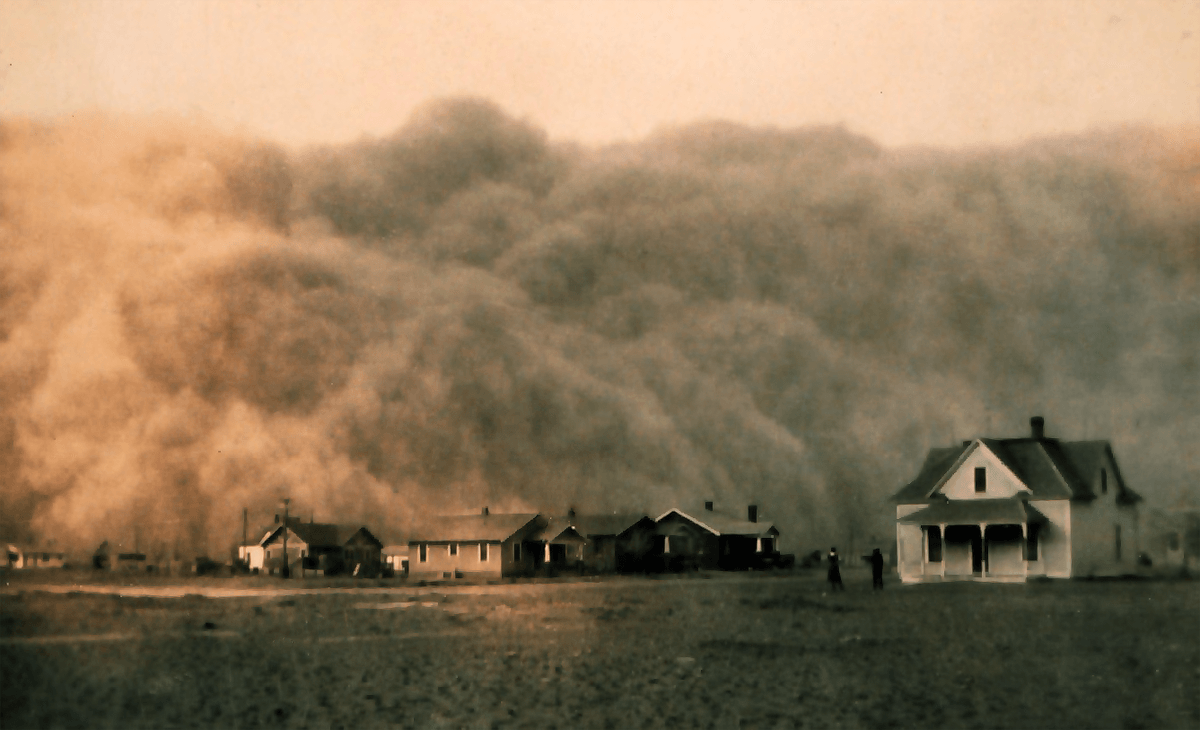
Credit: George Everett Marsh Jr. · Public domain
A drought is a long period of time when an area gets much less water than usual. It happens when rain or snow does not fall for weeks, months, or even years. Without enough water, the soil dries out, rivers shrink, and plants and animals struggle to survive. Droughts can happen almost anywhere, from farms in the American Midwest to grasslands in Africa.
Droughts are different from other weather problems because they build up slowly. A blizzard arrives in hours. A drought can sneak up on a region over months. By the time people notice, wells may already be running low and crops may already be dying.
Scientists describe droughts in different ways. A meteorological drought just means less rain than normal. An agricultural drought means the soil is too dry for crops to grow. A hydrological drought means rivers, lakes, and underground water are running low. One kind often leads to the next. If the sky stays dry long enough, every part of the water supply starts to feel it.
Droughts have shaped human history. In the 1930s, parts of the central United States went through years of drought at the same time as poor farming had stripped the soil. Strong winds picked up the dry dirt and carried it in huge dust clouds. This time was called the Dust Bowl. Farms failed, and hundreds of thousands of people had to leave their homes. Some scientists also believe that long droughts helped end the ancient Maya civilization more than 1,000 years ago.
A drought does more than dry out the land. When plants die and the ground turns to dust, wildfires start more easily and spread faster. Hungry animals leave their normal homes to look for water. Cities sometimes have to limit how much water people can use. Farmers may lose entire harvests, which can drive up the price of food in grocery stores far away.
Climate change is making droughts worse in many parts of the world. Warmer air pulls more moisture out of the soil, even when the same amount of rain falls. Some regions, like the western United States, have been in what scientists call a "megadrought" for more than 20 years. Tree rings in old wood show that this stretch is the driest the region has been in about 1,200 years.
People can prepare for droughts by saving water, building reservoirs, and growing crops that need less water. Rain almost always returns. The hard part is getting through the dry years until it does.
Related
Last updated 2026-04-25