
Drum
Credit: Mostafameraji · CC BY 4.0
A drum is a musical instrument that makes sound when you hit it. Most drums have a hollow body called a shell, with a thin, tight cover stretched across the top. The cover is called the drumhead. When you strike the head with a stick, a mallet, or your hand, the head vibrates. Those vibrations bounce around inside the shell and turn into the sound you hear.
Drums are one of the oldest instruments in the world. Some drums found by archaeologists are more than 6,000 years old, older than the pyramids of Egypt. Almost every culture on Earth has invented its own kind of drum. People have used drums to send messages across long distances, to lead soldiers in battle, to call villages together, and to keep dancers in time.
Drums come in many shapes and sizes. The bass drum in a marching band is large and deep, with a low boom you can feel in your chest. A snare drum has thin metal wires called snares stretched under the bottom head. The wires buzz against the head when you play it, giving the snare its sharp, crisp sound. Conga drums from Cuba are tall and narrow and played with the hands. The Japanese taiko drum can be huge, sometimes as wide as a car.
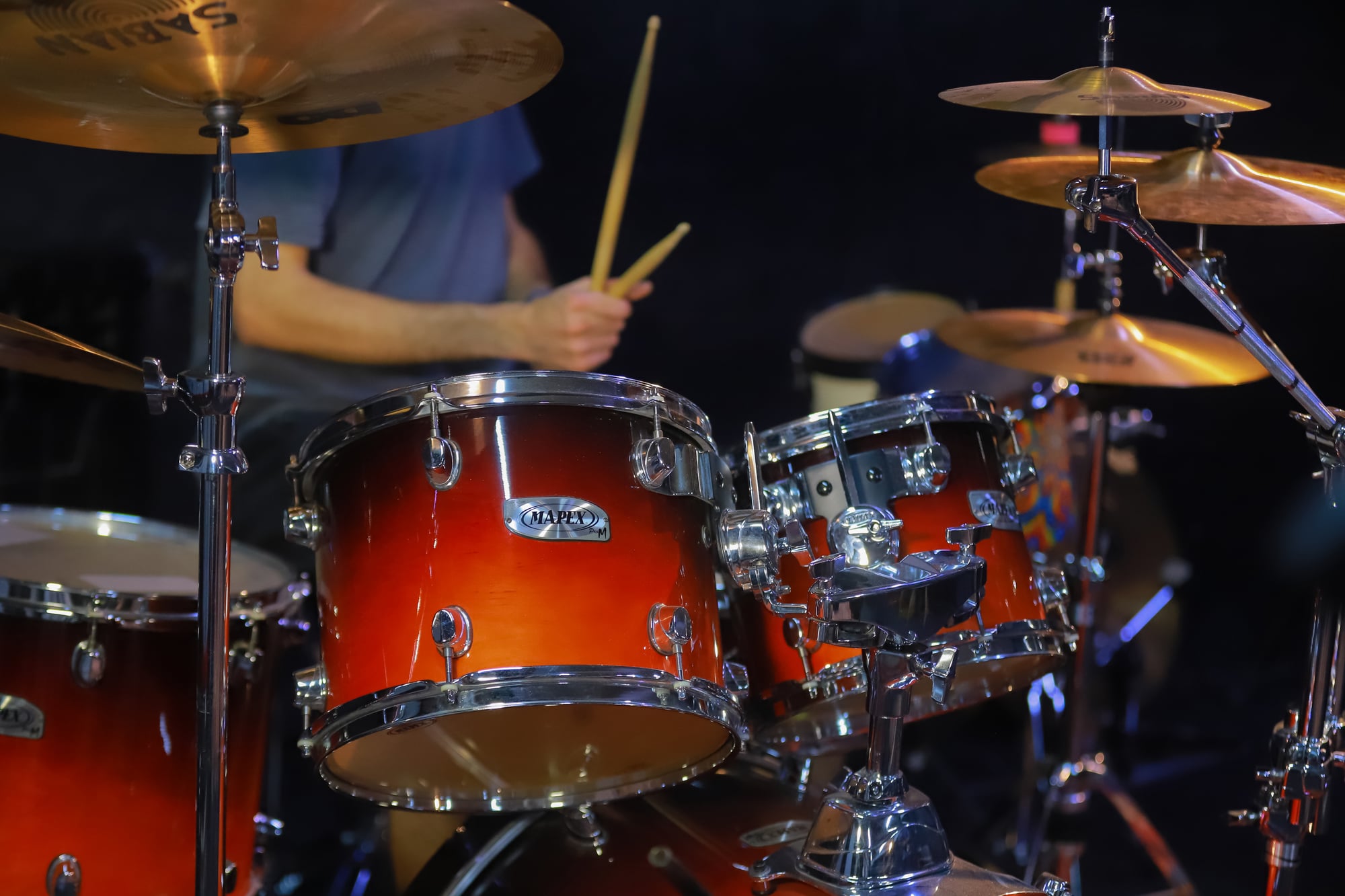
In a rock or jazz band, the drummer usually plays a drum kit. A kit is a group of drums and metal cymbals set up so one person can play all of them at once. The drummer hits the bass drum with a foot pedal while striking the snare, tom-toms, and cymbals with sticks. The drummer's job is to keep steady time so the rest of the band stays together.
Drums are not just for music. Different sizes and tensions of drumheads make different pitches, and skilled players in West Africa can use "talking drums" to copy the sounds of human speech. Listeners miles away once understood the messages.
Scientists have studied why drumming feels so good. When a group of people drum together, their heartbeats and breathing often start to match the rhythm. Some doctors now use drum circles to help patients with stress, memory loss, or autism. The pattern is simple but powerful. Hit a stretched skin with a stick, and the vibration moves through the air, into the ear, and somehow straight into the body.
Last updated 2026-04-26