
Spinosaurus
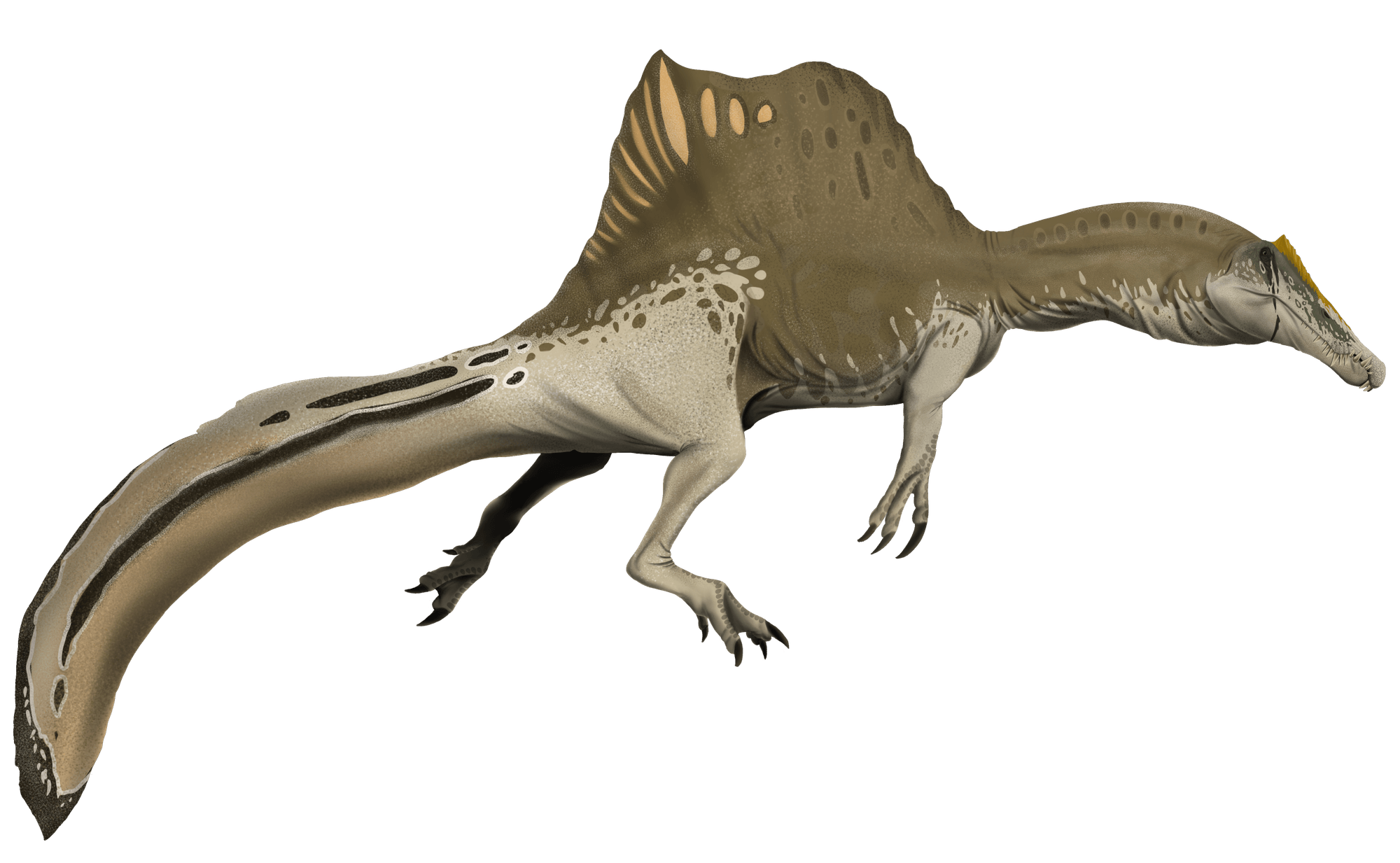
Credit: Gustavo Monroy-Becerril · CC BY-SA 4.0
Spinosaurus was a giant meat-eating dinosaur that lived in northern Africa about 95 million years ago. Its name means "spine lizard" because it had a row of tall bony spines running down its back. These spines held up a huge sail of skin. Spinosaurus is the largest meat-eating dinosaur ever found. Even bigger than Tyrannosaurus rex.
A full-grown Spinosaurus was around 50 feet long from nose to tail. That is longer than a school bus. It weighed about 7 or 8 tons, roughly as much as two pickup trucks. The sail on its back could stand 6 feet tall, higher than most adults. Scientists are not sure what the sail was for. Some think it helped the dinosaur stay cool. Others think it was used to attract mates or scare off rivals.
Unlike most big meat-eating dinosaurs, Spinosaurus did not mainly hunt on land. It lived near rivers and swamps and ate a lot of fish. Its long jaws looked like a crocodile's, full of straight, cone-shaped teeth perfect for gripping slippery prey. Some of the fish in its habitat were the size of a small car. Spinosaurus also had huge claws on its front legs, which may have helped it hook fish out of the water.
For a long time, nobody knew Spinosaurus could swim. The first bones were dug up in Egypt in 1912 by a German scientist named Ernst Stromer. Those bones were stored in a museum in Munich, Germany. Then in 1944, during World War II, bombs destroyed the museum and the fossils were lost forever. For decades, scientists only had Stromer's drawings and notes.
New fossils were finally found in Morocco starting in the 2000s. A huge discovery came in 2020. Paleontologists dug up a nearly complete Spinosaurus tail. The tail was flat and shaped like a paddle, built for pushing through water. This changed everything. Spinosaurus is now the only dinosaur we know of that could truly swim.
Scientists still argue about exactly how much time Spinosaurus spent in the water. Some think it swam after fish like a crocodile does. Others think it stood in shallow water and grabbed fish as they passed, more like a giant heron. New fossils keep adding to the puzzle.
Spinosaurus vanished about 93 million years ago, tens of millions of years before the asteroid that wiped out the other dinosaurs. Its rivers and swamps dried up, and the giant fish it ate disappeared too.
Last updated 2026-04-22