
Rattlesnake
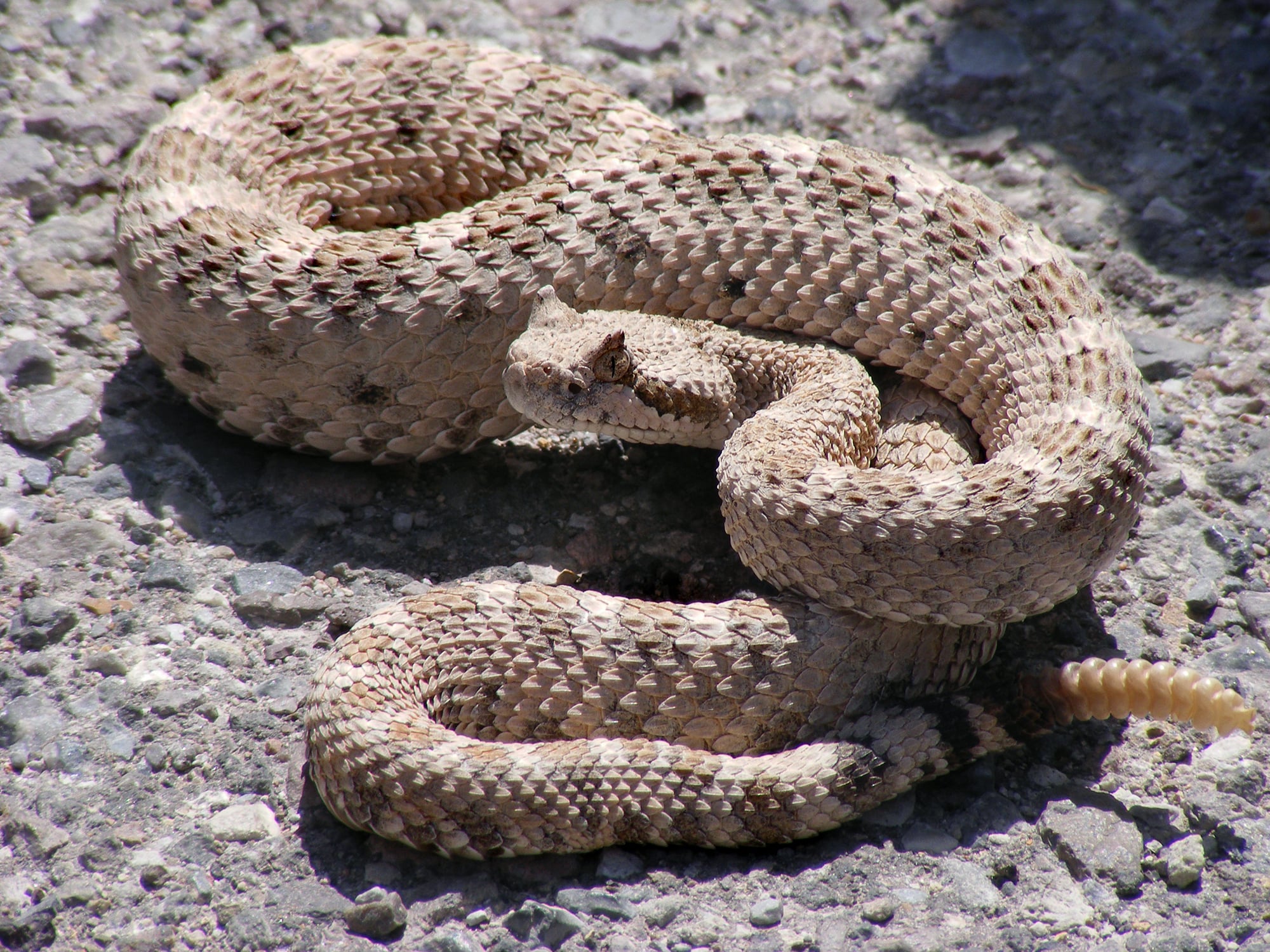
Credit: derivative work: Victorrocha (talk · contribs) Crotalus_cerastes_mesquite_springs_CA.JPG: Tigerhawkvok (talk · contribs) · CC BY-SA 3.0
The rattlesnake is a venomous snake that lives in North and South America. Its most famous feature is the rattle on the end of its tail. When the snake feels threatened, it shakes the rattle to warn other animals to stay away. There are about 36 different species of rattlesnakes. Most of them live in the deserts and grasslands of the United States and Mexico.
Rattlesnakes come in many sizes. The smallest kinds are only about a foot long. The biggest species, the eastern diamondback, can grow to 7 feet and weigh up to 10 pounds, heavier than a housecat. Rattlesnakes have thick bodies, triangle-shaped heads, and scales patterned in browns, grays, or greens. The patterns help them blend into rocks, sand, and dry grass.
The rattle itself is made of hollow, dry segments of keratin, the same material as your fingernails. When the snake shakes its tail, the segments knock against each other fast, up to 90 times per second. That fast movement makes a dry buzzing sound. Scientists once thought the rattle evolved to warn large animals like bison away from the snake. Others think it started as a side effect of tail shaking, which many snakes do. The debate is not fully settled.
Rattlesnakes are pit vipers. They have two deep pits on their faces, one between each eye and nostril. These pits can sense heat. A rattlesnake can "see" the warm body of a mouse in total darkness, which is useful because it mostly hunts at night. When it strikes, it injects venom through two long, hollow fangs. The venom breaks down the prey's body from the inside, making it easier to swallow and digest.
A rattlesnake's diet is mostly small mammals: mice, rats, ground squirrels, and rabbits. It also eats lizards and birds. After a big meal, a rattlesnake may not need to eat again for weeks. In cold months, many rattlesnakes gather together in dens inside caves or rock piles. Hundreds of snakes may share a single den to stay warm.
Rattlesnakes almost never attack people on purpose. Most bites happen when someone steps on a snake or reaches into a place without looking. If you hear that dry buzzing sound while hiking, the snake is asking you to back away. Rattlesnakes are an important part of their ecosystems. They keep rodent populations under control and are food for hawks, eagles, roadrunners, and kingsnakes.
Related
Last updated 2026-04-22