
Ladybug
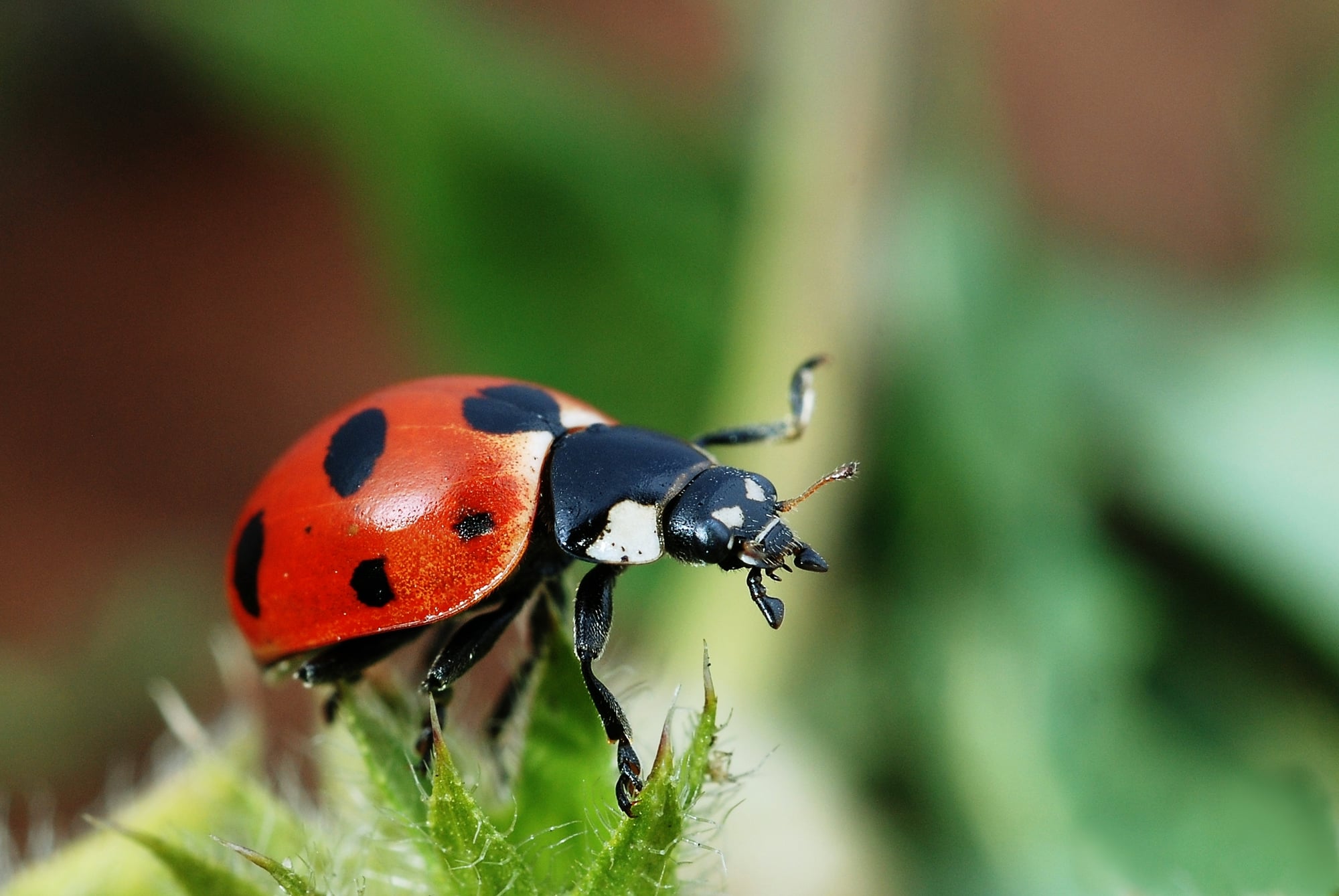
Credit: Gilles San Martin from Namur, Belgium · CC BY-SA 2.0
The ladybug is a small, round beetle found on almost every continent on Earth. Most kinds have a bright red or orange shell with black spots, though some are yellow, black, or even striped. There are about 5,000 different species of ladybugs in the world. Scientists usually call them "lady beetles" because they are not true bugs. They belong to the beetle family.
A ladybug is tiny. Most are only a quarter of an inch long, about the size of a pencil eraser. The bright shell you see is actually a pair of hard wing covers called elytra. When a ladybug wants to fly, it lifts these covers and unfolds two thin flying wings hidden underneath. The flying wings beat about 85 times per second.
Farmers love ladybugs because of what they eat. A single ladybug can eat 50 aphids in one day, and as many as 5,000 aphids over its whole life. Aphids are tiny insects that suck juice out of plants and damage crops. Because ladybugs hunt them, farmers and gardeners sometimes buy bags of live ladybugs and release them in their fields. This is called natural pest control.
Those bright colors are a warning. In nature, red and orange often mean "do not eat me." Birds that try to eat a ladybug quickly learn that it tastes terrible. The ladybug can also play dead until the danger passes. These tricks work so well that very few animals bother hunting ladybugs at all.
Ladybugs go through a big change called metamorphosis, just like butterflies. A mother ladybug lays tiny yellow eggs on the underside of a leaf, usually near a group of aphids. The eggs hatch into long, spiky larvae that look nothing like their parents. Some people say the larvae look like tiny black alligators. After eating aphids for a few weeks, the larva attaches itself to a leaf and turns into a pupa. About a week later, an adult ladybug crawls out.
In cold places, ladybugs survive winter by huddling together in huge groups. Thousands of them pile up under logs, in rock piles, or inside the walls of houses. Some of these winter gatherings can hold tens of thousands of ladybugs in a single spot.
The name "ladybug" comes from the Middle Ages in Europe. Farmers prayed to the Virgin Mary when insects destroyed their crops, and when the little red beetles showed up and ate the pests, the farmers called them "Our Lady's beetles."
Last updated 2026-04-22