
Chipmunk
Credit: Rhododendrites · CC BY-SA 4.0
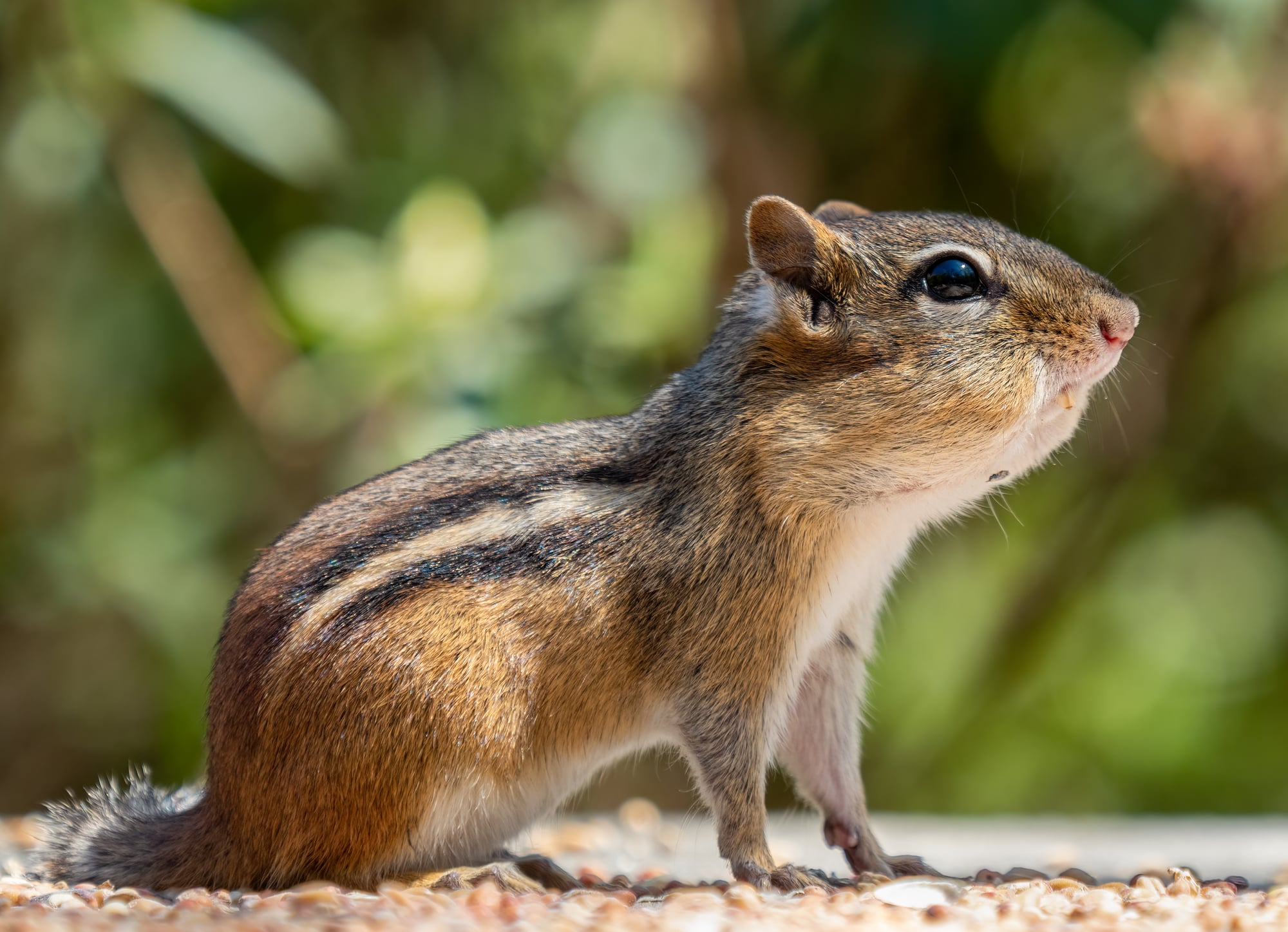
The chipmunk is a small, striped rodent found mostly in the forests of North America. It belongs to the squirrel family. Chipmunks are easy to spot because of the dark and light stripes that run down their backs and across their faces. Most chipmunks are about 5 to 6 inches long, not counting the tail, and weigh only 2 to 5 ounces. That is less than a slice of bread.
There are 25 species of chipmunks in the world. All but one live in North America. The eastern chipmunk is the largest and most common kind in the United States. The Siberian chipmunk, which lives across northern Asia, is the only species found outside North America.
Chipmunks spend most of their day looking for food. They eat seeds, nuts, berries, mushrooms, insects, and even small frogs. Their favorite trick is stuffing food into the stretchy pouches inside their cheeks. A single chipmunk can carry dozens of sunflower seeds at once. It hurries back to its burrow to unload the food, then runs out for more.
The burrow is the center of a chipmunk's life. A chipmunk digs a network of tunnels that can reach 30 feet long, with separate rooms for sleeping, storing food, and raising babies. The main entrance is often hidden under a log or rock. Chipmunks are careful builders. They carry the dirt away in their cheeks and scatter it so predators cannot find the door.
In late fall, chipmunks pack their burrows with thousands of seeds and nuts. Then they go into a long rest called torpor. This is not true hibernation, like a bear's winter sleep. A chipmunk wakes up every few days, eats from its food pile, and goes back to sleep. Its heart rate drops from about 350 beats a minute to only around 4.
Chipmunks are chatty animals. They make a sharp "chip-chip" sound, which is how they got their name. They also make a lower clucking sound when a hawk or other predator is nearby. Other chipmunks hear the warning and dive for cover.
Life is short and risky for a chipmunk. Hawks, owls, foxes, weasels, snakes, and housecats all hunt them. Most wild chipmunks live only two or three years. But their work matters for the forest. When a chipmunk forgets where it buried some of its acorns, those seeds sprout into new trees. A single forgetful chipmunk can plant a whole grove.
Last updated 2026-04-22