
Chameleon
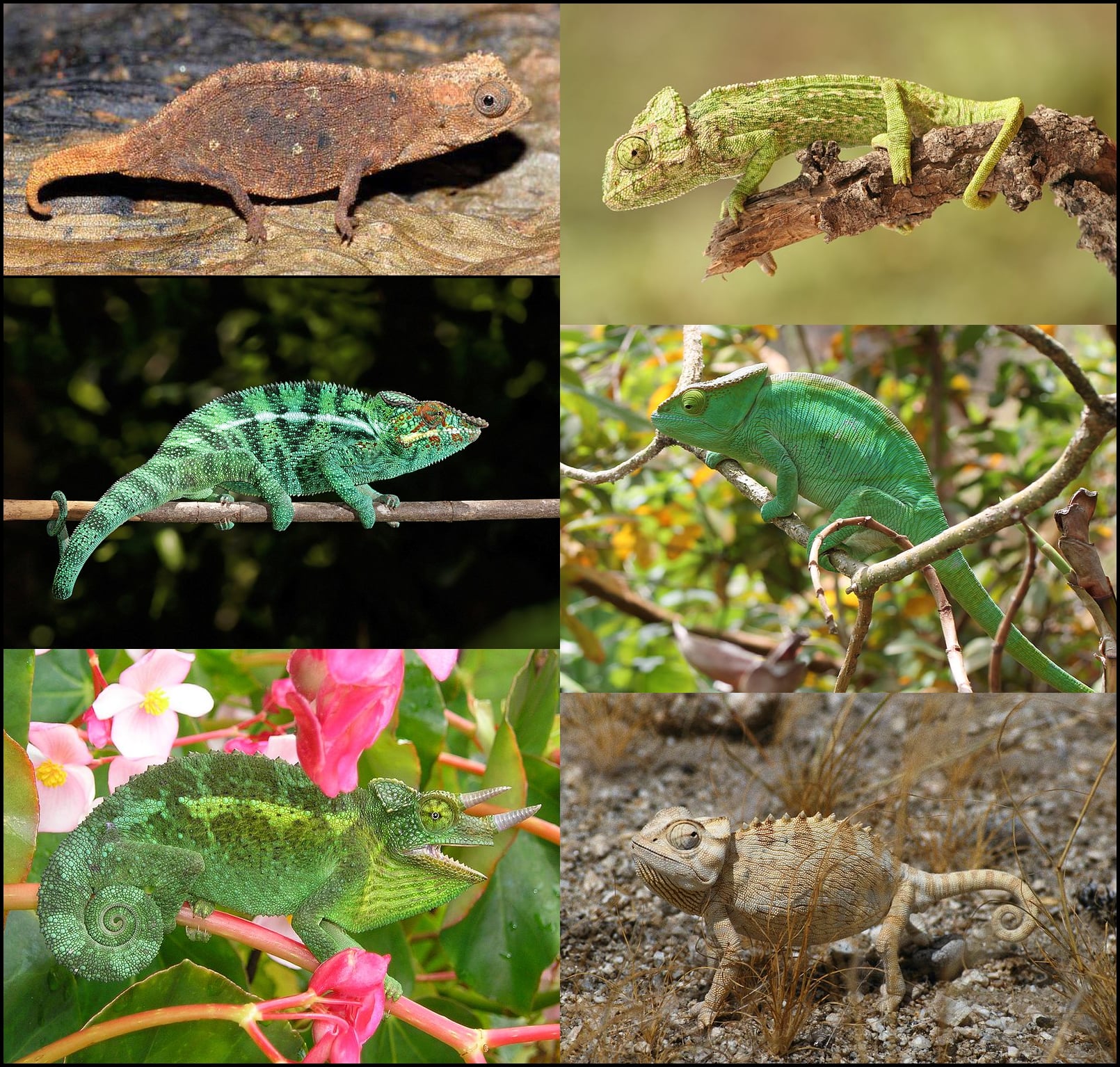
Credit: MathKnight · CC BY-SA 4.0
The chameleon is a type of lizard famous for changing the color of its skin. There are about 200 species of chameleons. Most live in Africa, especially on the island of Madagascar. Others live in parts of southern Europe, the Middle East, and India. Chameleons range in size from tiny ones smaller than your thumbnail to large ones almost two feet long.
Chameleons have bodies built for climbing trees. Their feet have toes fused together into two groups, like mittens, so they can grip branches tightly. Their tails curl and wrap around twigs like an extra hand. This kind of grabbing tail is called a prehensile tail. Each eye can swivel on its own, so a chameleon can look forward and backward at the same time.
The most famous thing about chameleons is their color changing. Many people think they change color to blend in with their surroundings. That is mostly a myth. Scientists now know that chameleons change color mainly to show how they feel or to talk to other chameleons. An angry male might turn bright yellow and red to warn a rival. A calm chameleon stays green or brown. Color can also help them warm up or cool off, since darker skin soaks up more heat from the sun.
How do they do it? A chameleon's skin has tiny crystals arranged in special layers. When the chameleon relaxes or stretches its skin, the spacing between those crystals changes. Different spacing reflects different colors of light. So the chameleon is not really painting its skin. It is changing the way light bounces off it.
Chameleons eat mostly insects. They hunt with one of the fastest tongues in the animal kingdom. A chameleon's tongue can be longer than its whole body. It shoots out in a tiny fraction of a second, hits the bug with a sticky tip, and pulls it back into the mouth. The whole attack is over before most prey knows anything has happened.
Female chameleons usually lay eggs in the ground, though a few species give birth to live young. The babies are on their own from the moment they hatch. No parent sticks around to protect them.
Many chameleon species are in trouble. The forests of Madagascar, where most chameleons live, are being cut down for farms and firewood. Some chameleons are also caught and sold as pets. Scientists are working to protect chameleon habitats so these strange, slow-moving lizards keep their place in the world's forests.
Last updated 2026-04-22