
Anteater
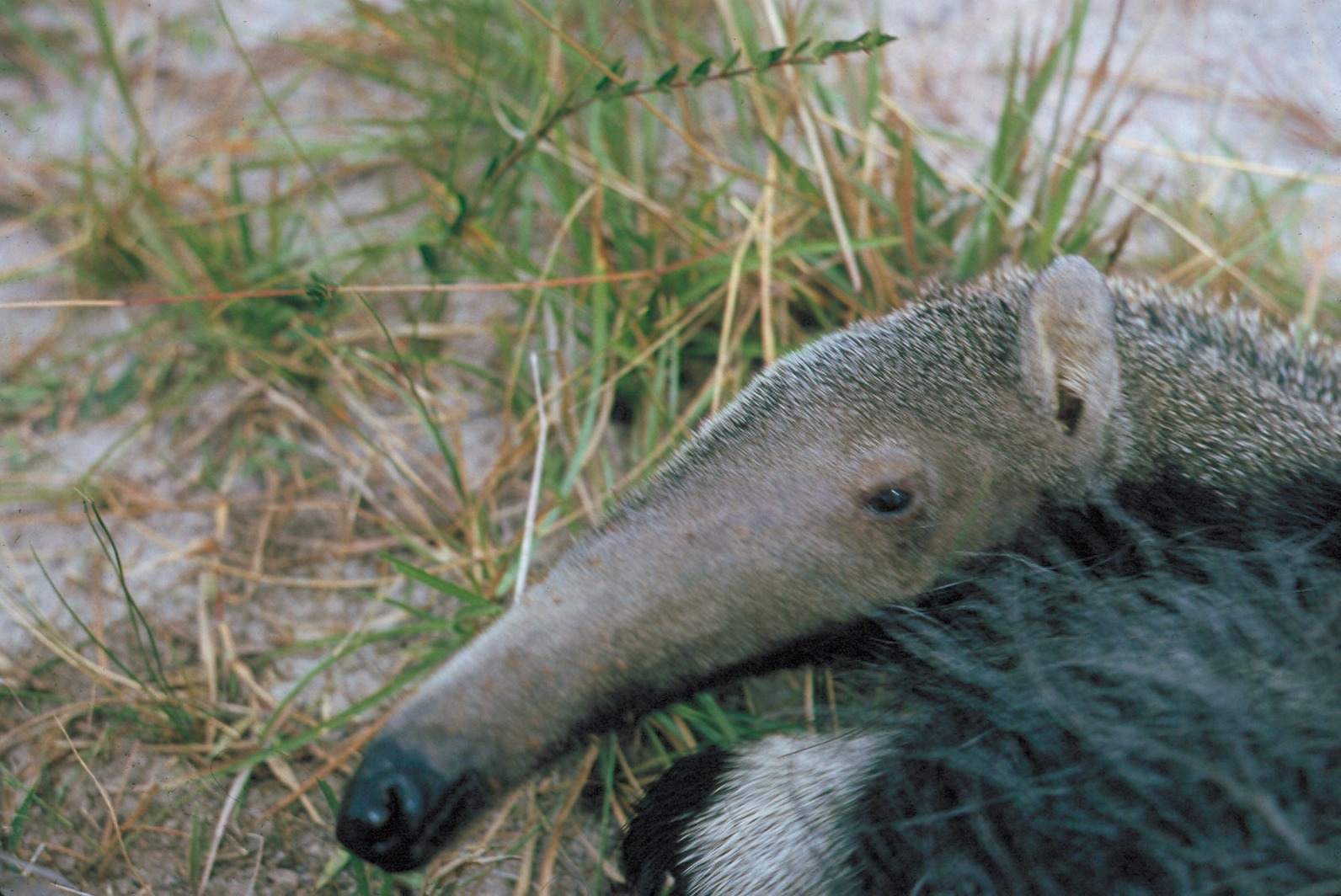
Credit: Garst, Warren, 1922-2016, photographer · CC BY-SA 4.0
An anteater is a mammal from Central and South America that eats ants and termites. It has a long, thin snout, a sticky tongue, strong claws, and no teeth. There are four species alive today. The biggest is the giant anteater, which can grow up to seven feet long from nose to tail. The smallest is the silky anteater, which is only about the size of a squirrel.
Anteaters are built around one job: getting insects out of nests. A giant anteater's tongue can stretch two feet, longer than your arm. The tongue is covered in tiny spines and coated in sticky spit. When an anteater rips open a termite mound with its powerful claws, it flicks its tongue in and out up to 150 times a minute. Ants and termites stick to the tongue and get pulled into the mouth.
A giant anteater can eat about 35,000 ants and termites in a single day. But it rarely destroys a whole nest. It usually feeds for only a minute or two before moving on. This gives the colony time to rebuild, so the anteater can come back and eat from it again later.
Anteaters have no teeth, so they cannot chew. Instead, their stomach does the work. The stomach has hard, muscular walls and often contains small stones. These stones help grind up the insects, much like a bird's gizzard.
Different anteaters live in different places. Giant anteaters walk across grasslands and open forests. Silky anteaters live high in rainforest trees and almost never come down. Tamanduas, the middle-sized anteaters, climb well and also hunt on the ground. Tamanduas have a bare patch on the end of their tail that they use to grip branches.
An anteater's claws are so long that it walks on its knuckles to keep them sharp. Those same claws are its main defense. When a jaguar or puma attacks, a giant anteater will rear up on its back legs and slash with its front claws. Anteaters have been known to seriously injure big cats and even people who get too close.
Giant anteaters are listed as vulnerable, which means they are at risk of becoming endangered. They are losing grasslands to farms and roads, and many are hit by cars. Anteaters are related to sloths and armadillos, three of the strangest branches on the mammal family tree.
Last updated 2026-04-22