
Crusades
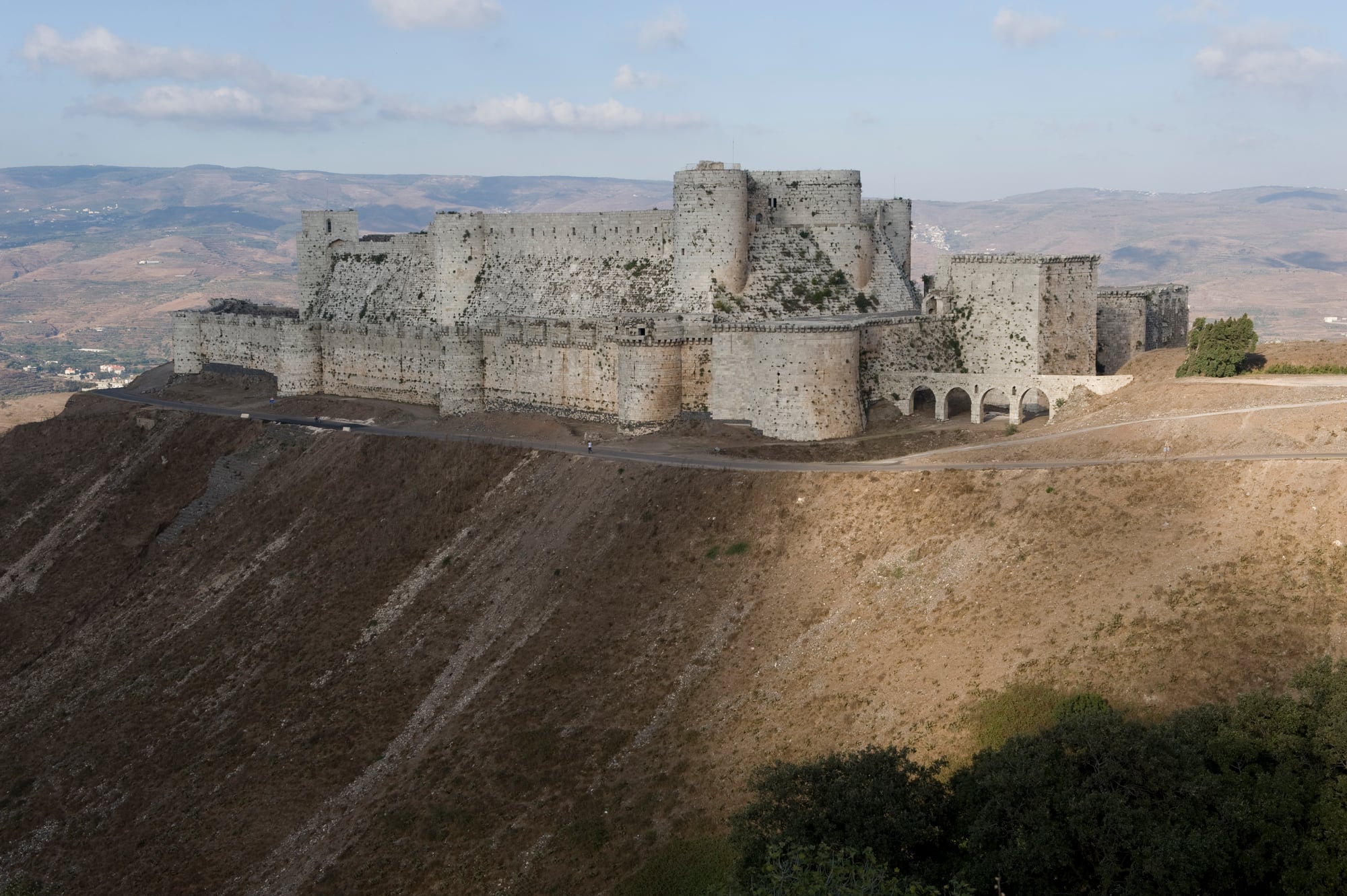
Credit: Dosseman · CC BY-SA 4.0
The Crusades were a series of religious wars fought mostly between Christian armies from Europe and Muslim armies in the Middle East. They lasted for almost 200 years, from 1095 to 1291. The main goal of the early Crusades was to take control of the city of Jerusalem and the lands around it. Christians, Muslims, and Jews all consider this region holy.
The First Crusade began in 1095. Pope Urban II gave a famous speech in France that year. He called on Christian knights to march east and capture Jerusalem from Muslim rulers. Thousands of knights, soldiers, and ordinary people joined. Some came for religious reasons. Others wanted land, money, or adventure. The pope promised that fighters who died would have their sins forgiven.
The journey was brutal. The crusaders walked thousands of miles across Europe and the Middle East. Many died from hunger, thirst, or disease before they ever reached a battle. In 1099, after a long siege, the surviving crusaders captured Jerusalem. They killed many of the city's Muslim and Jewish residents in the process. The crusaders set up four small Christian kingdoms in the region.
Muslim leaders soon began taking the land back. The most famous was Saladin, a sultan from Egypt. In 1187, Saladin's army defeated the crusaders and recaptured Jerusalem. This loss shocked Europe and led to the Third Crusade. England's King Richard the Lionheart fought Saladin and won several battles, but he never retook Jerusalem. The two leaders eventually signed a peace treaty.
There were at least seven major Crusades, plus several smaller ones. Some went very wrong. The Fourth Crusade in 1204 never reached the Holy Land at all. Instead, the crusaders attacked Constantinople, a Christian city, and burned much of it. There was also a "Children's Crusade" in 1212, though historians still argue about what really happened. Many of the marchers were probably poor young people, not actual children, and most never reached the Holy Land.
The Crusades finally ended in 1291, when the last Christian-held city in the region fell to Muslim forces. The crusaders had failed to keep Jerusalem.
The Crusades changed the world in ways no one planned. European traders brought back spices, silk, sugar, paper, and new ideas in math and medicine. Muslim libraries shared writings from ancient Greece that Europe had nearly forgotten. But the Crusades also left deep wounds. They damaged trust between Christians, Muslims, and Jews for centuries. Historians still debate how much the Crusades shape conflicts in the region today, and how much modern problems have other, more recent causes.
Related
Last updated 2026-04-26