
Electric Grid
Credit: Nixdorf · CC BY-SA 3.0
The electric grid is the giant network that carries electricity from where it is made to the homes, schools, and businesses that use it. It is made of power plants, wires, poles, towers, and special boxes called transformers. In the United States alone, the grid includes more than 7,000 power plants and over 600,000 miles of high-voltage wire. That is enough wire to wrap around the Earth more than 24 times.
Electricity starts at a power plant. Some plants burn coal or natural gas. Others use nuclear energy, falling water, wind, or sunlight. All of them spin a machine called a generator, which turns motion into electric current. Solar panels are the one big exception. They make electricity straight from sunlight without spinning anything.
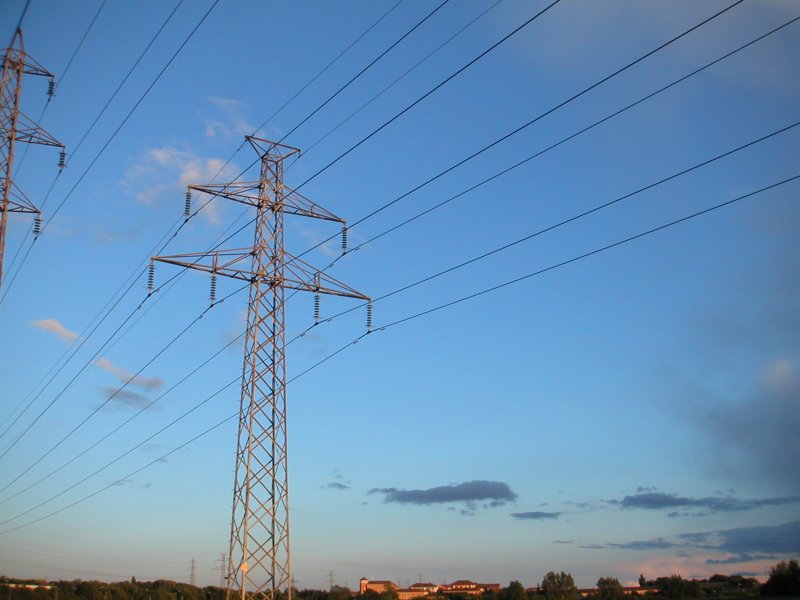
Once the electricity leaves the plant, it travels through thick wires held up by tall metal towers. These wires carry power at very high voltage, sometimes more than 500,000 volts. High voltage is used because it loses less energy over long distances. Before the electricity reaches your house, transformers step the voltage down to a safer level. The last small transformer, often a gray can on a power pole or a green box on the ground, drops it to about 120 volts.
Here is the strange part. The grid has almost no place to store electricity. Power has to be made at the same moment it is used. When you flip a light switch, a power plant somewhere is making a tiny bit more electricity to match. Operators watch the grid all day and night, adding power when people wake up and use toasters, and cutting back when everyone goes to sleep.
If supply and demand fall out of balance for too long, parts of the grid shut down to protect themselves. This is called a blackout. In August 2003, a single overloaded line in Ohio set off a chain reaction. About 50 million people across the northeastern United States and Canada lost power. Some of them stayed in the dark for days.
Engineers are now changing the grid in big ways. Solar panels and wind turbines make power only when the sun shines or the wind blows, which makes balancing harder. Huge batteries are being built to store extra power for later. Computers help predict demand and reroute electricity around problems. People sometimes call this a "smart grid." It is one of the largest and most complicated machines humans have ever built, and most of the time, you never even notice it working.
Related
Last updated 2026-04-25