
Calendar
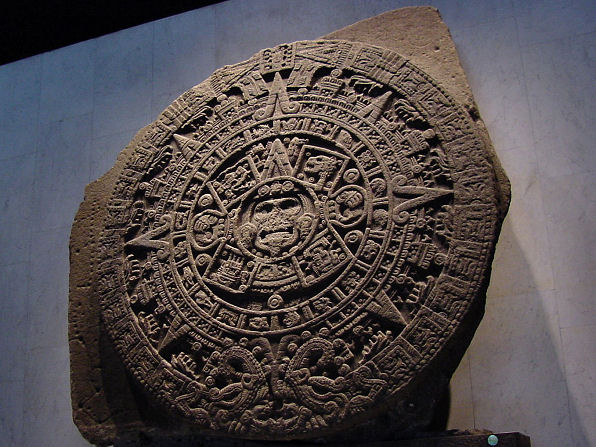
Credit: No machine-readable author provided. SeRgioo assumed (based on copyright claims). · Public domain
A calendar is a system for organizing days into weeks, months, and years. People use calendars to track time, plan ahead, and remember when things happened in the past. Almost every culture in history has invented some kind of calendar. Most of them were built around the movements of the Sun and the Moon.
The first calendars came from ancient farming people. They needed to know when to plant crops and when to expect floods. The ancient Egyptians, more than 5,000 years ago, watched for the bright star Sirius to rise just before the Sun. That sight told them the Nile River was about to flood. Their calendar had 12 months of 30 days each, plus five extra days at the end of the year.
A year is the time it takes Earth to travel once around the Sun. That trip takes about 365.24 days. Because it is not a whole number, calendars get out of step over time if you ignore the leftover quarter day. To fix this, we add one extra day every four years. That extra day is February 29, and a year that has it is called a leap year.
The calendar most of the world uses today is called the Gregorian calendar. Pope Gregory XIII made it the official Catholic calendar in 1582. He was fixing an older Roman calendar that had drifted by 10 days over many centuries. Other countries switched over slowly. Britain and its colonies did not change until 1752, and Russia waited until 1918.
Not every culture uses the Gregorian calendar for everything. The Islamic calendar follows the Moon and has 354 days, so its holidays move through the seasons. The Jewish calendar mixes the Moon and the Sun and adds an extra month in some years. The Chinese calendar also follows both, and it sets the date for Lunar New Year. Many people use one of these calendars for religious holidays and the Gregorian calendar for everything else.
Other calendars are famous for their math. The ancient Maya in Central America used three calendars at once. One of them counted off long stretches of time and kept track of more than 5,000 years. Some people thought it predicted the world would end in 2012. It did not. The Maya cycle simply rolled over to its next number, the way an odometer in a car flips back to zero.
Related
Last updated 2026-04-25