
Apollo Program
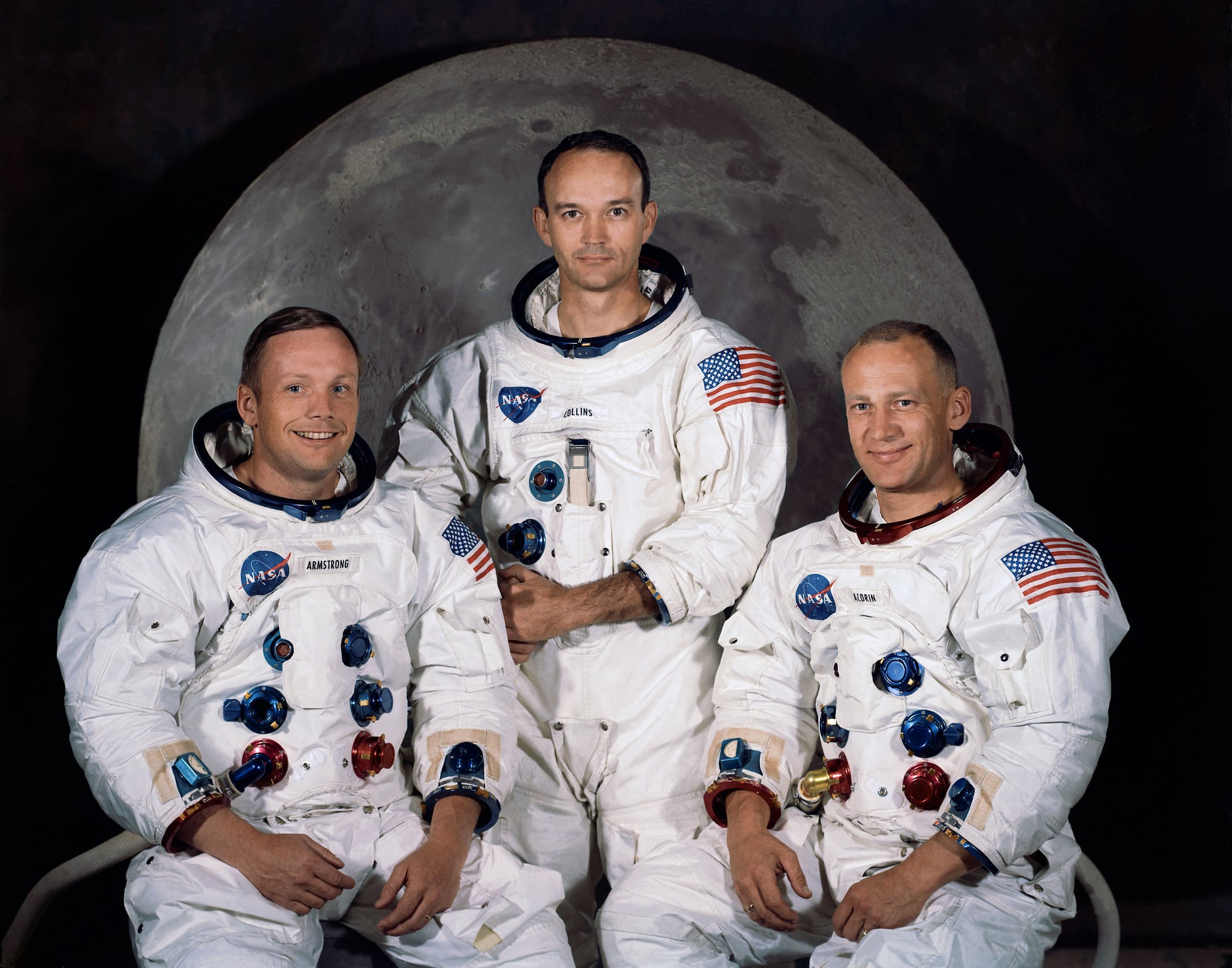
Credit: NASA · Public domain
The Apollo program was a series of American space missions that sent astronauts to the Moon. It ran from 1961 to 1972 and was managed by NASA. Twelve Apollo astronauts walked on the Moon's surface. They remain the only humans who have ever done so.
The program began during the Cold War. The Soviet Union had just launched the first satellite and the first human into space. The United States was in second place. In 1961, President John F. Kennedy gave a speech asking the country to land a person on the Moon before the end of the decade. It was a huge promise. No one knew yet how to do it.
Getting to the Moon took a rocket called the Saturn V. It stood 363 feet tall, taller than a 30-story building. The Saturn V is still the most powerful rocket ever flown successfully. It burned 20 tons of fuel every second at liftoff. The noise was so loud it shook buildings miles away.
The program did not start smoothly. In January 1967, a fire broke out inside Apollo 1 during a test on the launch pad. Three astronauts, Gus Grissom, Ed White, and Roger Chaffee, were killed. NASA stopped and redesigned the spacecraft to be safer. The next missions tested the new equipment in space and around the Moon.
Apollo 11 made the first landing. On July 20, 1969, Neil Armstrong and Buzz Aldrin stepped onto the Moon while Michael Collins orbited above them. About 650 million people watched on television, roughly one out of every five people alive at the time.
Five more landings followed. Apollo 12 landed near an old robot probe. Apollo 13 had an oxygen tank explode on the way to the Moon, and the crew had to use the lunar lander as a lifeboat to get home alive. Apollo 14 brought golf balls. Apollo 15, 16, and 17 carried a small electric car called the lunar rover, which let astronauts drive across the surface and explore farther from their landing sites.
The last mission, Apollo 17, left the Moon in December 1972. The astronauts brought back 842 pounds of Moon rocks in total. Scientists are still studying those rocks today. Some samples were sealed and saved on purpose, so future scientists with better tools could open them. One sealed tube was finally opened in 2022.
No human has been back to the Moon since 1972. NASA's Artemis program is working to change that, with plans to land astronauts there again later this decade.
Last updated 2026-04-22