
Cellular Respiration
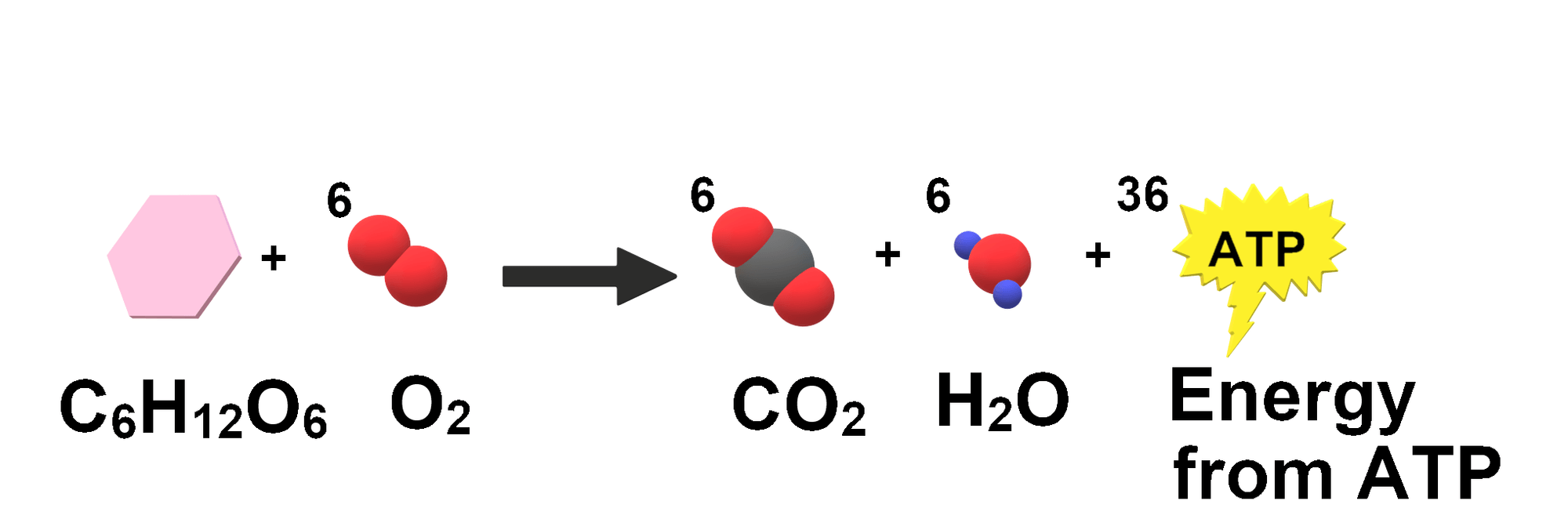
Credit: Christinelmiller · CC BY-SA 4.0
Cellular respiration is the way living things turn food into energy. It happens inside the cells of plants, animals, fungi, and most other living things. In this process, a cell takes sugar and oxygen and breaks them down. The breakdown releases energy the cell can use. Water and a gas called carbon dioxide are left over as waste.
Your body is doing cellular respiration right now. When you eat an apple, your stomach and intestines break the food into tiny pieces, including a sugar called glucose. Your blood carries the glucose to every cell. Your lungs pull in oxygen, and your blood carries that to the cells too. Inside each cell, the glucose and oxygen meet and react. The energy that comes out powers everything you do, from thinking to running to growing new skin.
Most of this work happens in tiny parts of the cell called mitochondria. Scientists sometimes call them the cell's powerhouses. A mitochondrion is shaped a little like a jellybean, and even the smallest cells may have hundreds of them. Muscle cells and heart cells have even more, because they need lots of energy.
The energy from respiration is stored in a special molecule called ATP. Think of ATP as a tiny rechargeable battery. Cells build ATP during respiration and then use it to do work. A single human body makes and uses about its own weight in ATP every day.
Cellular respiration and photosynthesis fit together like two halves of a puzzle. Plants use sunlight, water, and carbon dioxide to make sugar and oxygen. Animals (and plants too) then use that sugar and oxygen to make energy, and they breathe out carbon dioxide. The carbon dioxide goes back into the air, where plants use it again. The same atoms move in a loop, over and over.
Sometimes cells have to make energy without enough oxygen. This backup process is called fermentation. When you sprint hard and your muscles burn, your muscle cells are doing fermentation because they cannot get oxygen fast enough. Yeast cells do fermentation too, which is how bread rises and how some foods are made.
Every heartbeat, every thought, every breath runs on cellular respiration. It is one of the oldest chemical processes on Earth, going back more than 2 billion years, long before any animal existed. Life figured out how to burn food for energy, and it has never stopped.
Related
Last updated 2026-04-23