
Measurement
Credit: Martinvl · CC BY-SA 3.0
Measurement is how we describe the size, amount, or value of something using numbers. When you say a table is six feet long, a bag weighs five pounds, or a movie lasts two hours, you are measuring. Measurement lets people compare things, build things, and share information that everyone can understand the same way.
Every measurement needs two parts: a number and a unit. The number tells how many. The unit tells what kind of size you are counting. Saying "the rope is 10" does not mean much. Saying "the rope is 10 feet" tells you exactly how long it is. Without units, numbers float free.
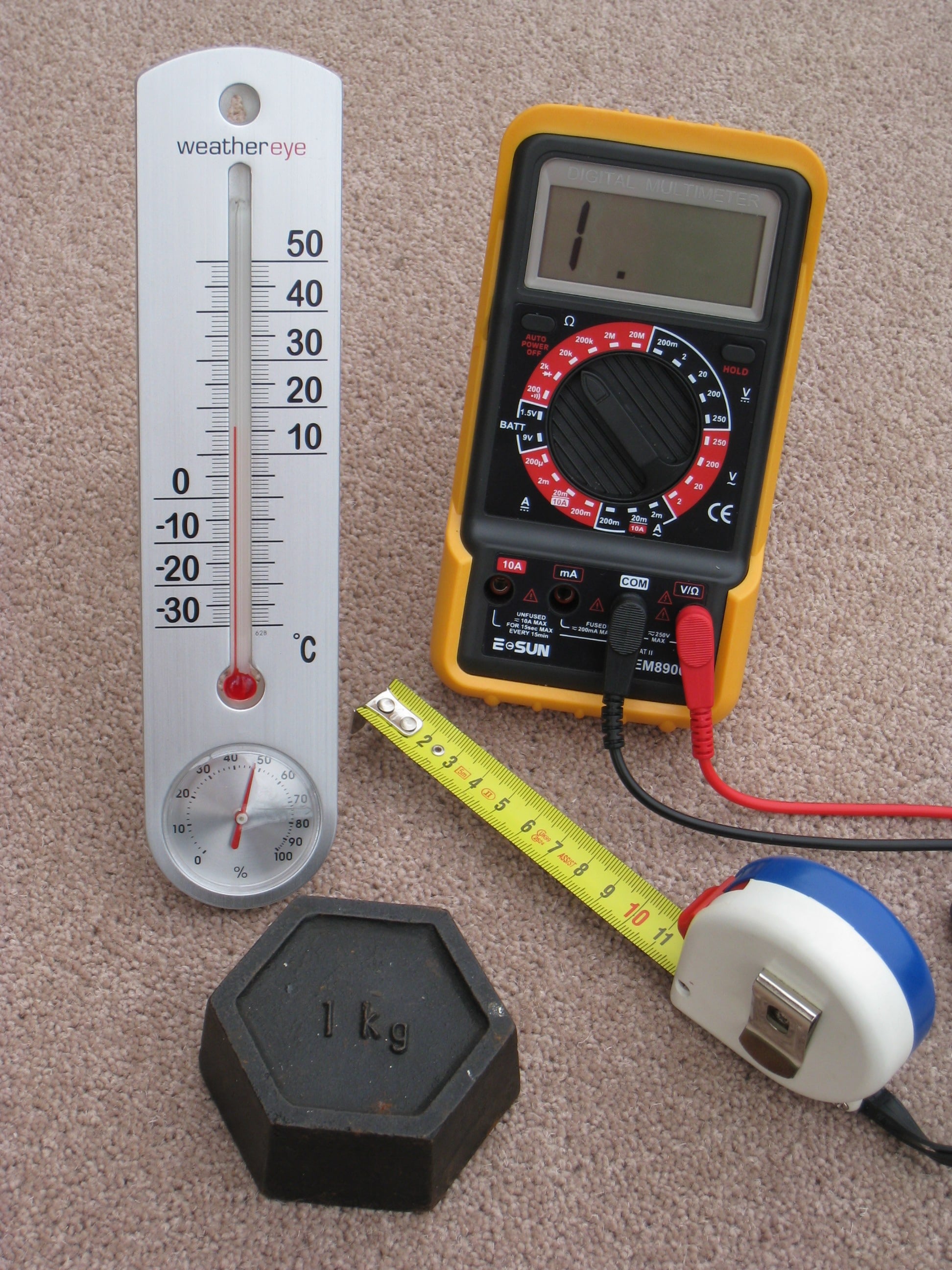
People measure many different things. Length tells how long, wide, or tall something is. Weight tells how heavy it is. Volume tells how much space something fills, like the water in a bottle. Time tells how long something takes. Temperature tells how hot or cold something is. Each kind of measurement has its own units and its own tools.
The world uses two main systems. The metric system uses meters, grams, and liters. It is built on tens, which makes the math easy. The customary system, used mostly in the United States, uses feet, pounds, and gallons. Most countries switched to metric long ago. The United States still uses customary units in daily life, though scientists in America use metric like everyone else.
Measurement is much older than writing. Ancient Egyptians used a unit called the cubit, the length of a forearm from elbow to fingertip. They used it to build the pyramids more than 4,500 years ago, before most modern math even existed. Builders today still amaze at how straight and even those stones turned out.
Old units caused problems, though. One person's foot was not the same as another's. A pound of grain in one town might not match a pound in the next. So countries agreed to set exact standards. Today a meter is defined by how far light travels in a tiny fraction of a second. That distance never changes, anywhere in the universe.
Measurement is everywhere in daily life. A doctor measures your height. A cook measures flour. An engineer measures a bridge. Without shared units, none of this would work. Measurement is the quiet language that lets people build, trade, and learn together.
Last updated 2026-04-26