
Mumbai
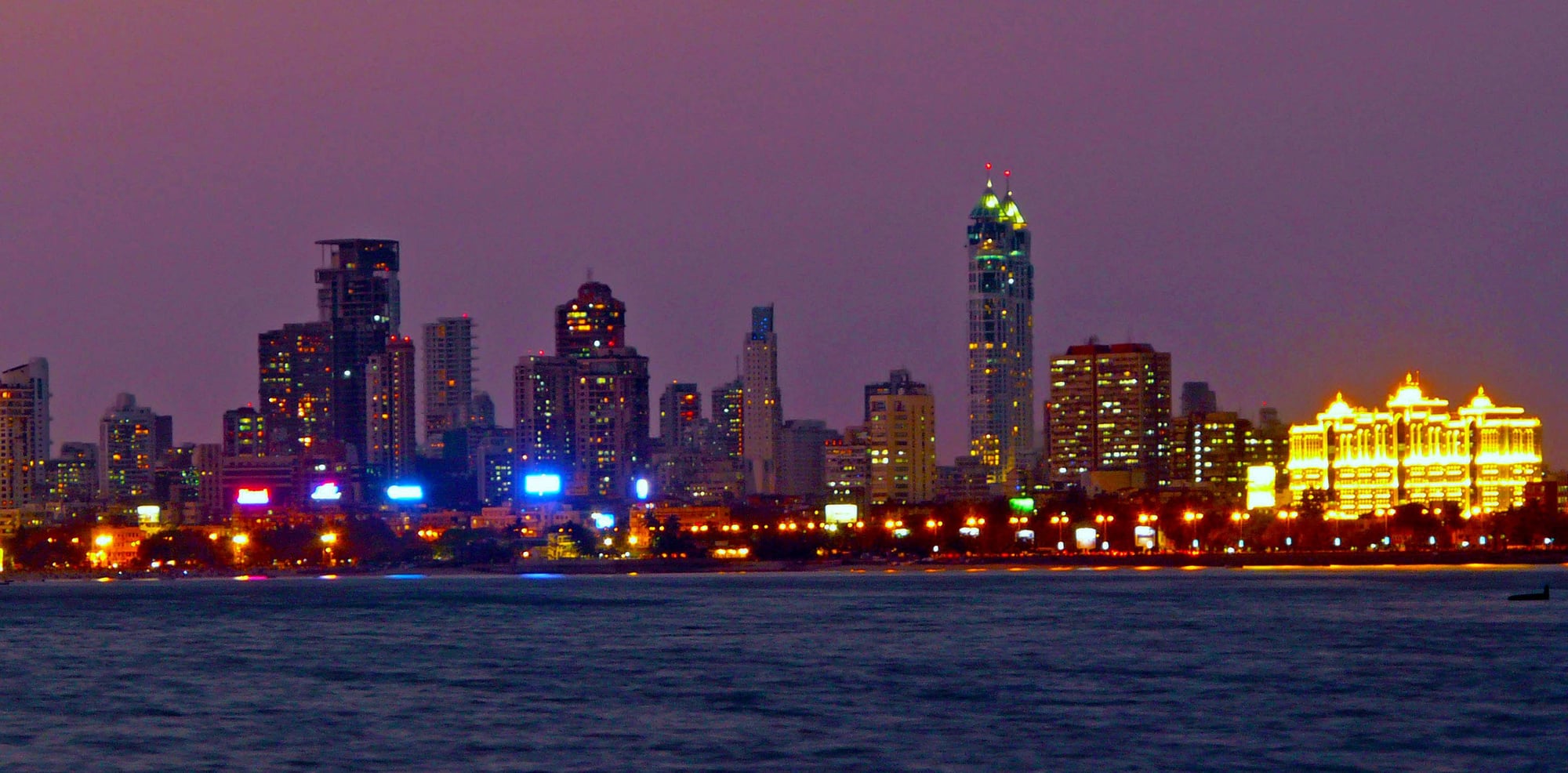
Credit: Cididity Hat · CC BY-SA 3.0
Mumbai is the largest city in India. It sits on the country's western coast, on the Arabian Sea. More than 20 million people live in the Mumbai area, which makes it one of the biggest cities in the world. For many years it was called Bombay. The government officially changed the name to Mumbai in 1995.
The city began as a group of seven small islands where local fishing people, the Koli, lived. Portuguese traders took control of the islands in the 1500s. They handed the land to England in 1661 as part of a royal wedding gift. The British East India Company then turned Bombay into a major port. Over the next two hundred years, workers filled in the shallow water between the islands. The seven islands became one long piece of land. That is the shape of the city today.
Mumbai is India's money center. The country's biggest banks, its stock exchange, and many large companies have their headquarters there. People from all over India move to Mumbai looking for work. Because of that, you can hear many languages on its streets, including Hindi, Marathi, Gujarati, and English.
The city is also the home of Bollywood. Bollywood is the nickname for India's Hindi-language film industry. It makes more movies each year than Hollywood does, often more than a thousand. Bollywood films are famous for long running times, bright costumes, and big song-and-dance scenes.
Mumbai is a city of sharp contrasts. On one block you might see tall glass office towers and fancy hotels. A few streets away, you might find Dharavi, one of the largest slums in the world. About a million people live in Dharavi, packed into an area smaller than New York's Central Park. Many residents run small workshops that recycle plastic, leather, and metal. The neighborhood sends goods all over India.
Some of Mumbai's most famous sights come from the British period. The Gateway of India, a tall stone arch on the waterfront, was built in 1924 to welcome visiting royalty. Nearby stands the Chhatrapati Shivaji Maharaj Terminus, a giant train station finished in 1887. It looks more like a palace than a station, with carved stone arches, domes, and statues.
Every summer, the monsoon rains arrive. Between June and September, Mumbai often gets more than 80 inches of rain, more than four times what New York City gets in a whole year. Streets flood, trains stop, and the whole city slows down until the skies clear.
Related
Last updated 2026-04-23