
Chile
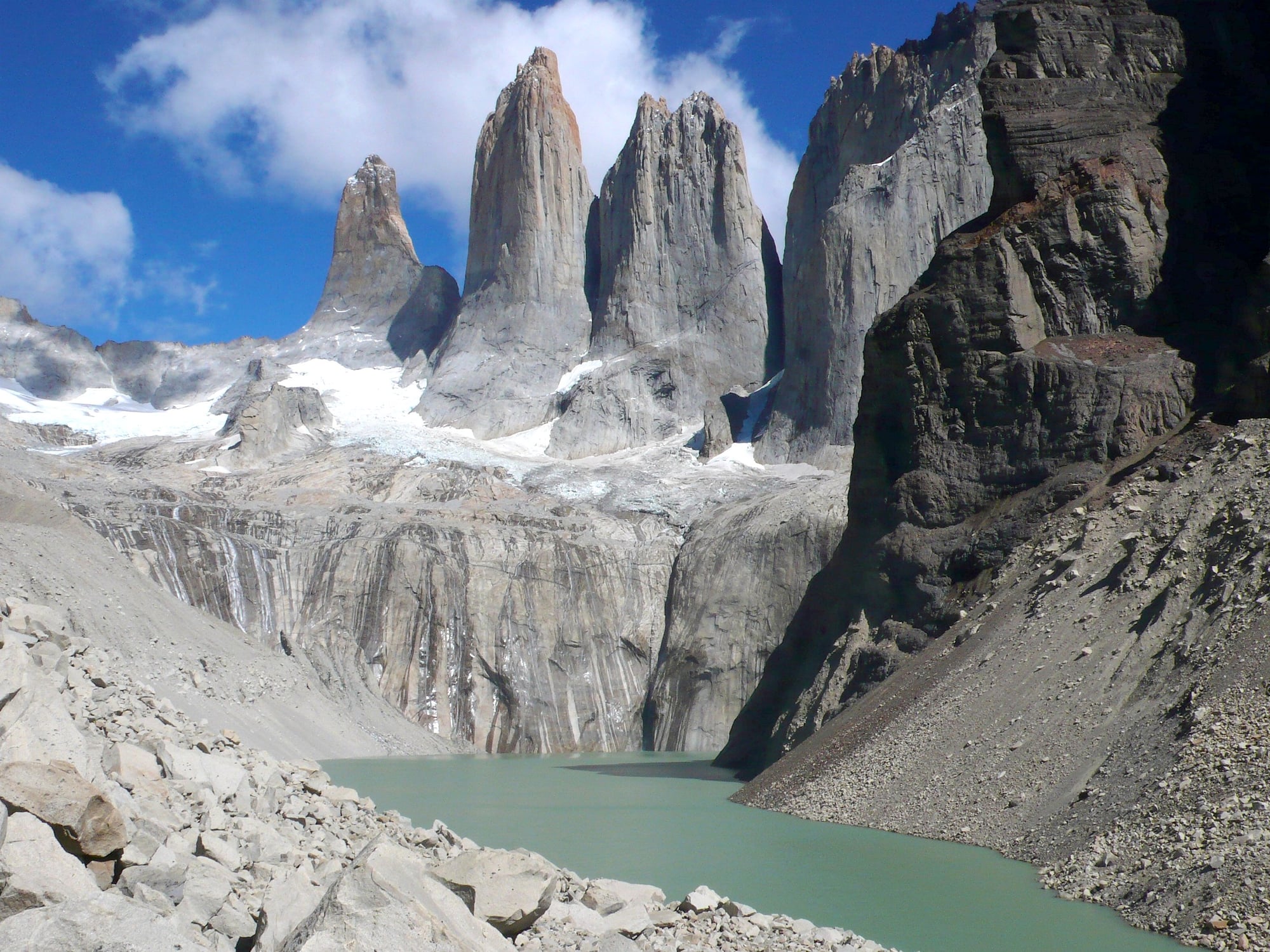
Credit: John Spooner · CC BY 2.0
Chile is a long, narrow country in South America. It runs down the western edge of the continent, between the Andes Mountains and the Pacific Ocean. Chile is one of the strangest-shaped countries in the world. It stretches about 2,650 miles from north to south, but it is only about 110 miles wide on average. That is about the same distance as driving from New York City to Washington, D.C., but stretched out longer than the whole United States is wide.
Because Chile is so long, it has many different climates. The north is home to the Atacama Desert, which is the driest desert on Earth. Some weather stations there have never recorded rain. Central Chile is mild and green, with warm summers and rainy winters. This is where most Chileans live, including the capital city of Santiago. Farther south, the land turns into cool forests, lakes, and tall snowy peaks. At the very bottom sits Patagonia, a wild region of glaciers, fjords, and windswept grasslands.
About 19 million people live in Chile. Most speak Spanish, which came with Spanish conquerors in the 1500s. Before the Spanish arrived, many Indigenous groups lived across the land. The Mapuche people of central and southern Chile fought Spanish rule for more than 300 years. About 10 percent of Chileans today identify as Mapuche, and their language, Mapudungun, is still spoken.
Chile broke free from Spain in 1818. Its history since then has included both democracy and dictatorship. From 1973 to 1990, a military leader named Augusto Pinochet ruled the country. Thousands of people were killed or disappeared under his government. Chile returned to democracy in 1990, and historians still study and debate that difficult period.
The land shakes often in Chile. The country sits on the edge of two tectonic plates that grind against each other. In 1960, Chile had the strongest earthquake ever recorded, measuring 9.5. It shook so hard that it sent a tsunami all the way across the Pacific to Japan.
Chile also has Easter Island, a tiny volcanic island about 2,300 miles off its coast. The island is famous for its giant stone statues called moai, carved long ago by the Rapa Nui people. How they moved the heavy statues, some weighing more than 80 tons, is still a puzzle scientists are working to solve.
Related
Last updated 2026-04-23