
Langston Hughes
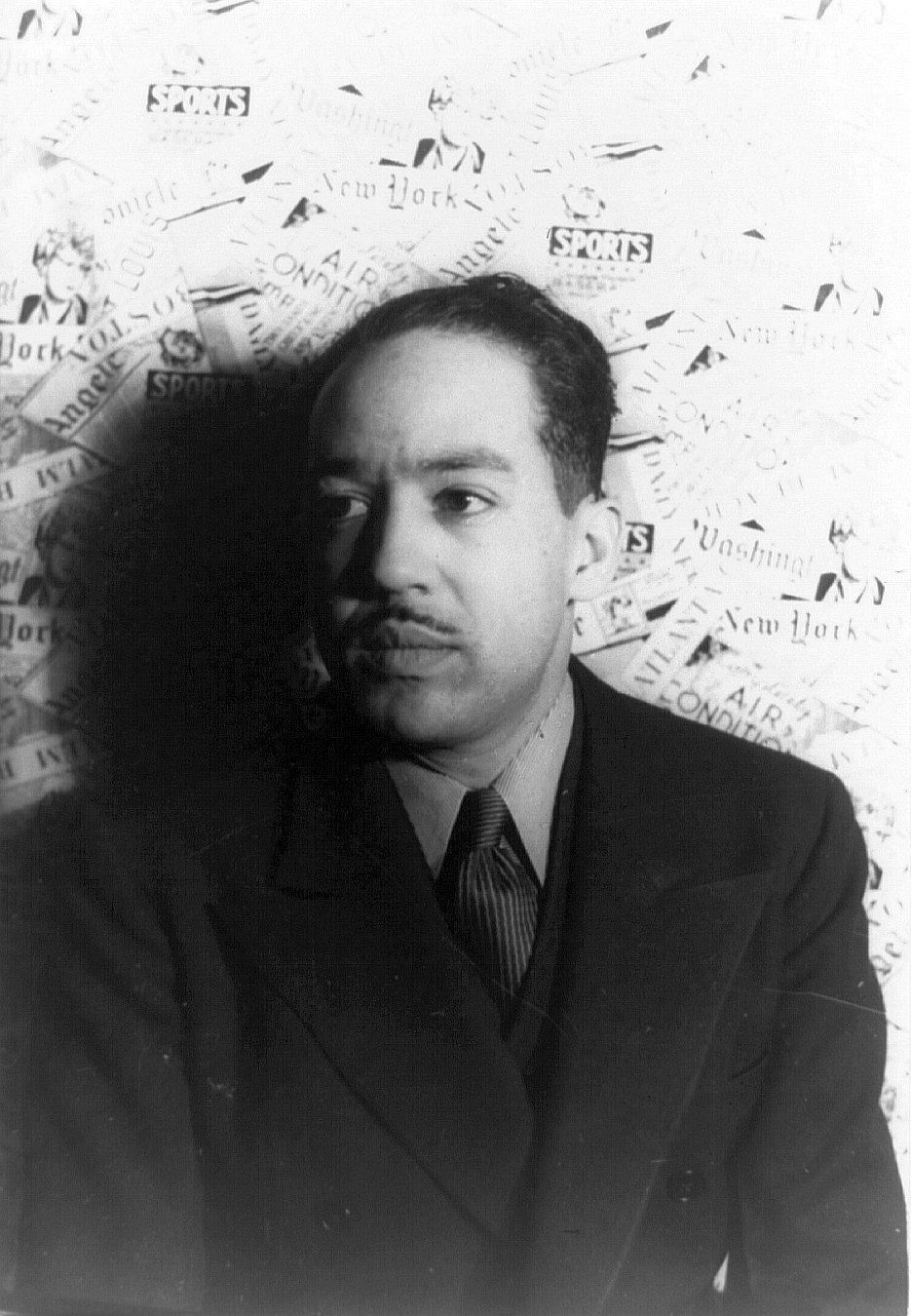
Credit: Carl Van Vechten · Public domain
Langston Hughes was an American poet, novelist, and playwright. He lived from 1902 to 1967. He became one of the most important Black writers in American history. He is best known for his poems about the lives, struggles, and joys of Black Americans in the early twentieth century.
Hughes was born in Joplin, Missouri. His parents split up when he was small, and he was raised mostly by his grandmother in Lawrence, Kansas. She told him stories about their family's long fight against slavery. One of her first husbands had died fighting alongside John Brown, an abolitionist who tried to start an uprising against slavery in 1859. These family stories shaped how Hughes saw the world.
He started writing poems in middle school. By high school in Cleveland, Ohio, his classmates had already named him class poet. After graduation, he traveled. He worked on ships that sailed to Africa and Europe. He washed dishes in a hotel in Paris. Everywhere he went, he kept writing.
In the 1920s, Hughes moved to Harlem, a Black neighborhood in New York City. Harlem was full of writers, painters, and musicians making new art. This burst of creativity is now called the Harlem Renaissance. Hughes became one of its biggest stars. His first book of poems, The Weary Blues, came out in 1926.
Hughes did something new with poetry. He wrote in the rhythms of jazz and blues music, the sounds he heard in Harlem clubs and on city streets. He wrote about ordinary people: cleaning women, elevator operators, kids, tired workers. Some critics back then thought poetry should sound fancy and old-fashioned. Hughes disagreed. He wanted poetry that sounded like real people talking and singing.
His most famous poems include "The Negro Speaks of Rivers," "I, Too," "Mother to Son," and "Harlem," which asks, "What happens to a dream deferred?" That last line gave the play A Raisin in the Sun its title. Hughes wrote more than a dozen books of poetry, plus novels, plays, children's books, and newspaper columns.
Hughes died in New York City in 1967. His ashes are buried under a floor design in Harlem, at a place now called the Langston Hughes Auditorium. Many later writers, including Maya Angelou and Lorraine Hansberry, said his work helped open the door for them.
Related
Last updated 2026-04-26