
Ozone Layer
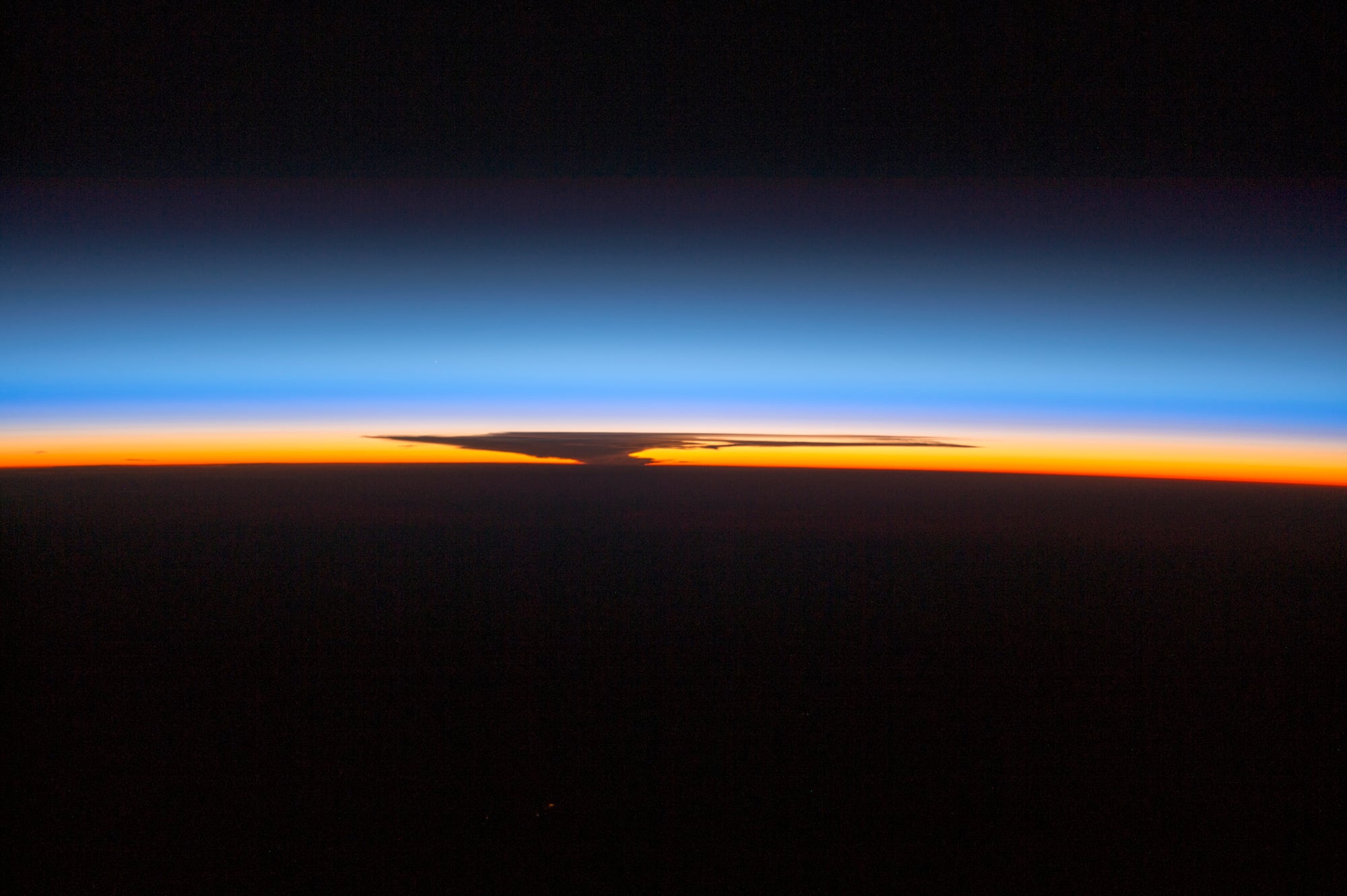
Credit: Earth Science and Remote Sensing Unit, Lyndon B. Johnson Space Center · Public domain
The ozone layer is a thin part of Earth's atmosphere that blocks most of the harmful rays from the Sun. It sits high above the ground, in a layer of the atmosphere called the stratosphere. The layer starts about 9 miles up and reaches up to about 22 miles. That is well above where airplanes fly.
Ozone is a kind of oxygen. The oxygen we breathe is made of two oxygen atoms joined together. Ozone is made of three oxygen atoms joined together. Ozone forms when sunlight hits regular oxygen high in the atmosphere and splits some of the molecules apart. The loose atoms then stick to other oxygen molecules and become ozone.
The ozone layer matters because the Sun gives off invisible rays called ultraviolet light, or UV light. Too much UV light is dangerous. It can cause sunburns, eye damage, and skin cancer. It can also harm plants and tiny ocean creatures that whole food chains depend on. Ozone soaks up most of the strongest UV rays before they reach the ground. Without the ozone layer, life as we know it could not exist on land.
In the 1970s, scientists noticed that the ozone layer was getting thinner. By the 1980s, they found a huge "hole" in the ozone layer over Antarctica each spring. The hole was bigger than the United States. The cause turned out to be human-made chemicals called CFCs. People used CFCs in spray cans, refrigerators, and air conditioners. When CFCs floated up into the stratosphere, sunlight broke them apart and released chlorine, which destroys ozone.
In 1987, almost every country in the world signed an agreement called the Montreal Protocol. The agreement banned CFCs and similar chemicals. The ban worked. The ozone layer is slowly healing. Scientists now think the hole over Antarctica could fully close by around 2066. The Montreal Protocol is often called the most successful environmental treaty ever signed.
There is one tricky thing about ozone. High up in the stratosphere, ozone protects life. But near the ground, ozone is a pollutant. Car exhaust and factory smoke can react in sunlight to make ground-level ozone, which is bad for lungs and crops. So the same chemical can help or hurt, depending on where it is. The ozone layer is a quiet shield, miles above your head, doing its job every second the Sun is shining.
Related
Last updated 2026-04-25