
Spanish Language
Credit: Wikimedia Commons · Public domain
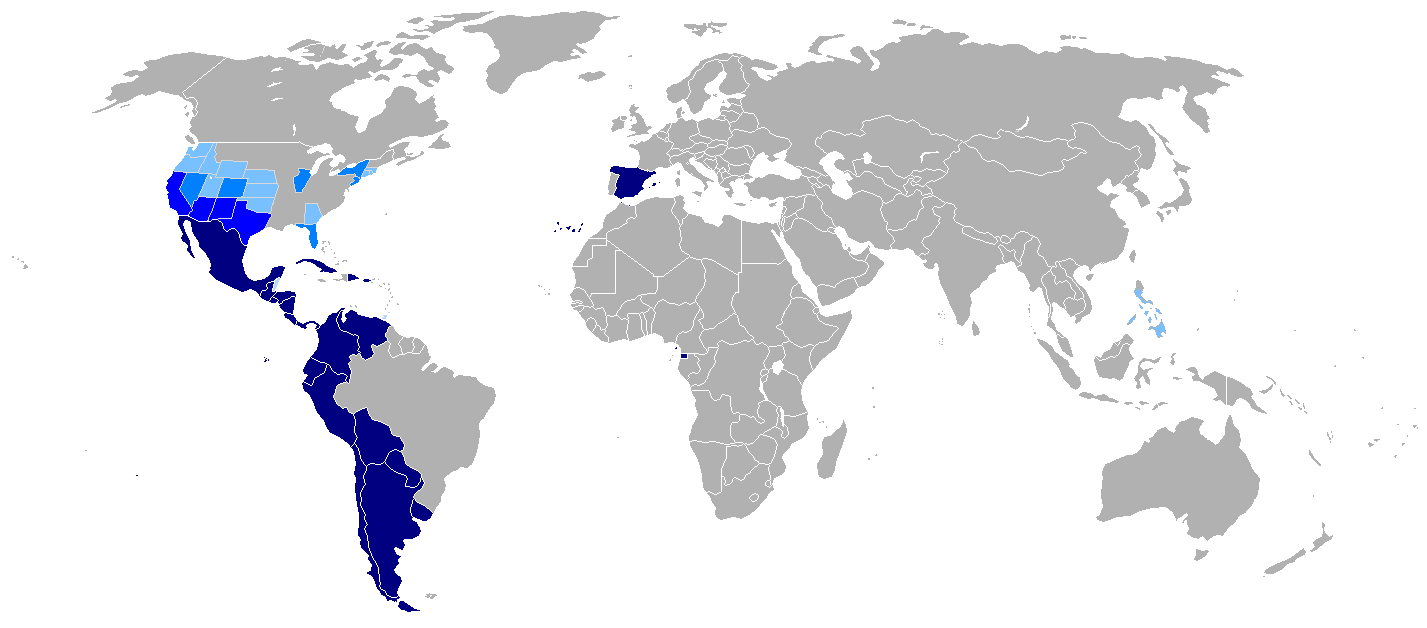
Spanish is a language spoken by about 500 million people around the world. It started in Spain, a country in Europe, and spread to many other parts of the world, especially Latin America. Spanish is one of the six official languages of the United Nations. After Mandarin Chinese, it has more native speakers than any other language on Earth.
Spanish grew out of Latin, the language of the ancient Romans. When Rome ruled Spain about 2,000 years ago, Roman soldiers and traders brought Latin with them. Over hundreds of years, the Latin spoken in Spain slowly changed. By around the year 1200, it had become its own language. French, Italian, Portuguese, and Romanian also grew out of Latin in the same way. These five languages are called the Romance languages because they all trace back to Rome.
Spanish spread far beyond Spain because of the Spanish Empire. Starting in the late 1400s, Spanish ships sailed to the Americas, the Philippines, and parts of Africa. The empire forced its language on the people it ruled. That is why Spanish is the main language today in Mexico, most of Central America, and most of South America. Brazil is the big exception. People there speak Portuguese, because Portugal claimed that land instead.
Spanish uses the same alphabet as English, plus one extra letter: ñ. The little wavy line over the n is called a tilde. The letter ñ makes a "ny" sound, like the middle of "canyon." Spanish also uses upside-down question marks and exclamation points at the start of a sentence, like ¿Cómo estás? It is the only major language that does this. The marks warn the reader that a question or exclamation is coming.
Spanish is the second most common language in the United States. More than 40 million people speak it at home, more than in Spain itself. Many American place names come from Spanish, including Florida ("flowery"), Colorado ("colored red"), Nevada ("snowy"), and Los Angeles ("the angels"). The word "rodeo" is Spanish, and so are "canyon," "tornado," "mosquito," and "chocolate."
Spanish is not the same everywhere. The Spanish spoken in Mexico sounds different from the Spanish spoken in Argentina or Spain. Words can change too. In Spain, a computer is an ordenador. In Mexico, it is a computadora. People from different countries can still understand each other easily, though, the way an American and an Australian can both speak English.
Related
Last updated 2026-04-26