
Pasta
Credit: David Adam Kess · CC BY-SA 4.0
Pasta is a food made from flour and water, shaped into many different forms, and then boiled. It is one of the most popular foods in the world. Pasta is closely linked with Italy, where many of the famous shapes were invented. But people in many cultures have made noodle-like foods for thousands of years.
Most pasta is made from a hard kind of wheat called durum. The wheat is ground into a flour called semolina. Cooks mix the semolina with water, and sometimes eggs, to make a stiff dough. The dough can be rolled flat, cut into strips, pressed through molds, or twisted by hand. After it dries, the pasta can sit on a shelf for a year or more without spoiling.
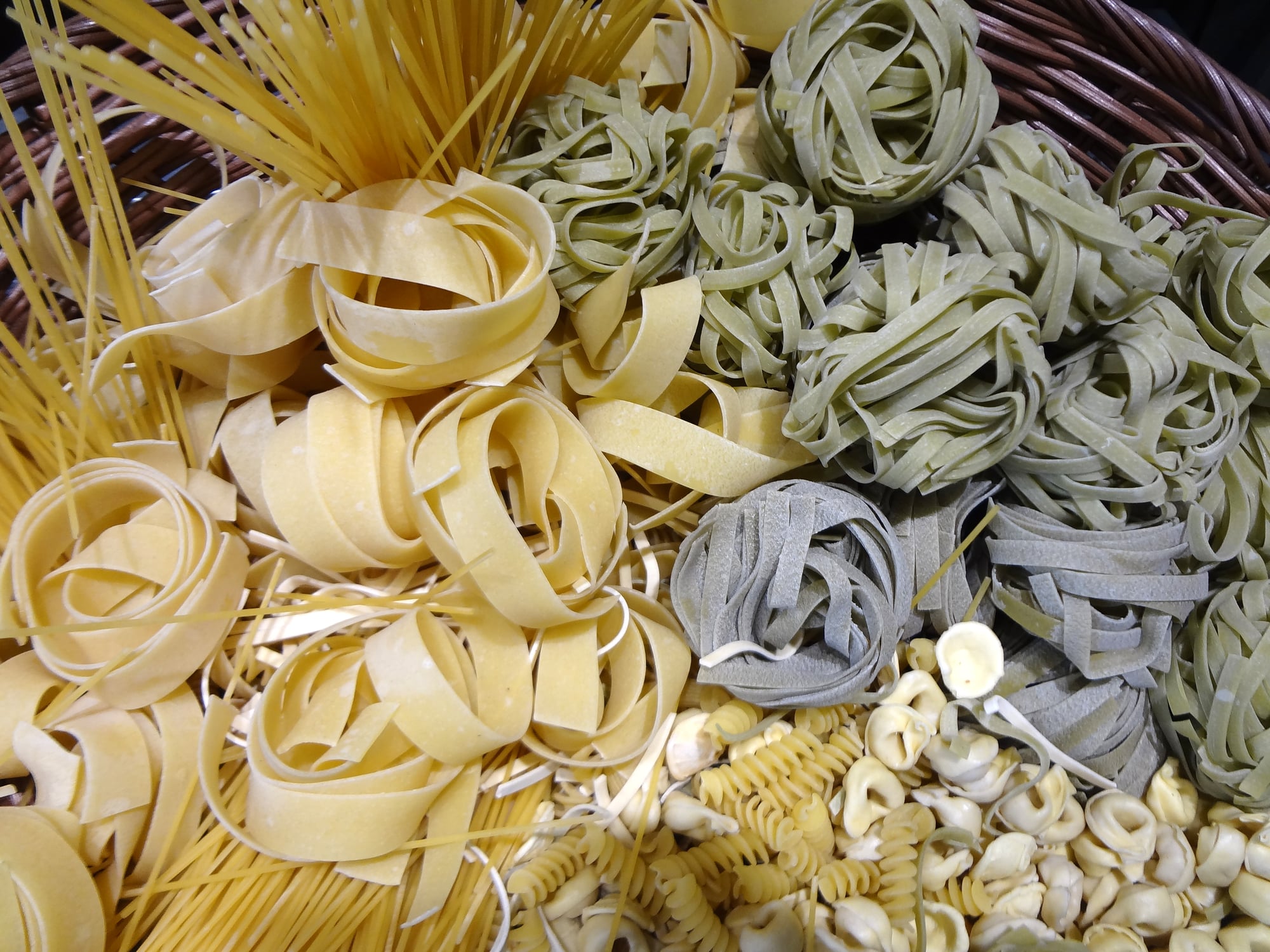
Pasta comes in hundreds of shapes. Long, thin strands are called spaghetti. Flat ribbons are called fettuccine. Short tubes are called penne or rigatoni. There are shells, bow ties, spirals, and tiny stars for soup. Each shape works best with a different kind of sauce. Thin strands hold light oils and tomato sauces. Tubes and twists trap chunky meat sauces inside their grooves. Italian cooks take this matching of shape and sauce very seriously.
Where did pasta come from? People often say that Marco Polo brought noodles to Italy from China in the 1200s. Most food historians no longer believe this story. Italians were already eating pasta before Marco Polo's trip. The Chinese had been making wheat noodles for a very long time too. Archaeologists in China found a 4,000-year-old bowl of noodles buried under a flood layer. So pasta and noodles were probably invented more than once, in different places.
Pasta became a worldwide food in the 1800s and 1900s. Machines made it cheap and easy to produce. Italian families who moved to the United States, Argentina, and Brazil brought their recipes with them. Spaghetti and meatballs became a classic American dinner, even though it is not really a traditional Italian dish. Today the average Italian eats about 51 pounds of pasta each year. That is more than anyone else in the world.
Pasta is cheap, filling, and easy to store. It feeds families on tight budgets and shows up on fancy restaurant menus. The same simple mix of flour and water can become a quick weeknight meal or a careful handmade dish that takes hours to fold and shape.
Last updated 2026-04-26