
Cubism
Credit: Juan Gris · Public domain
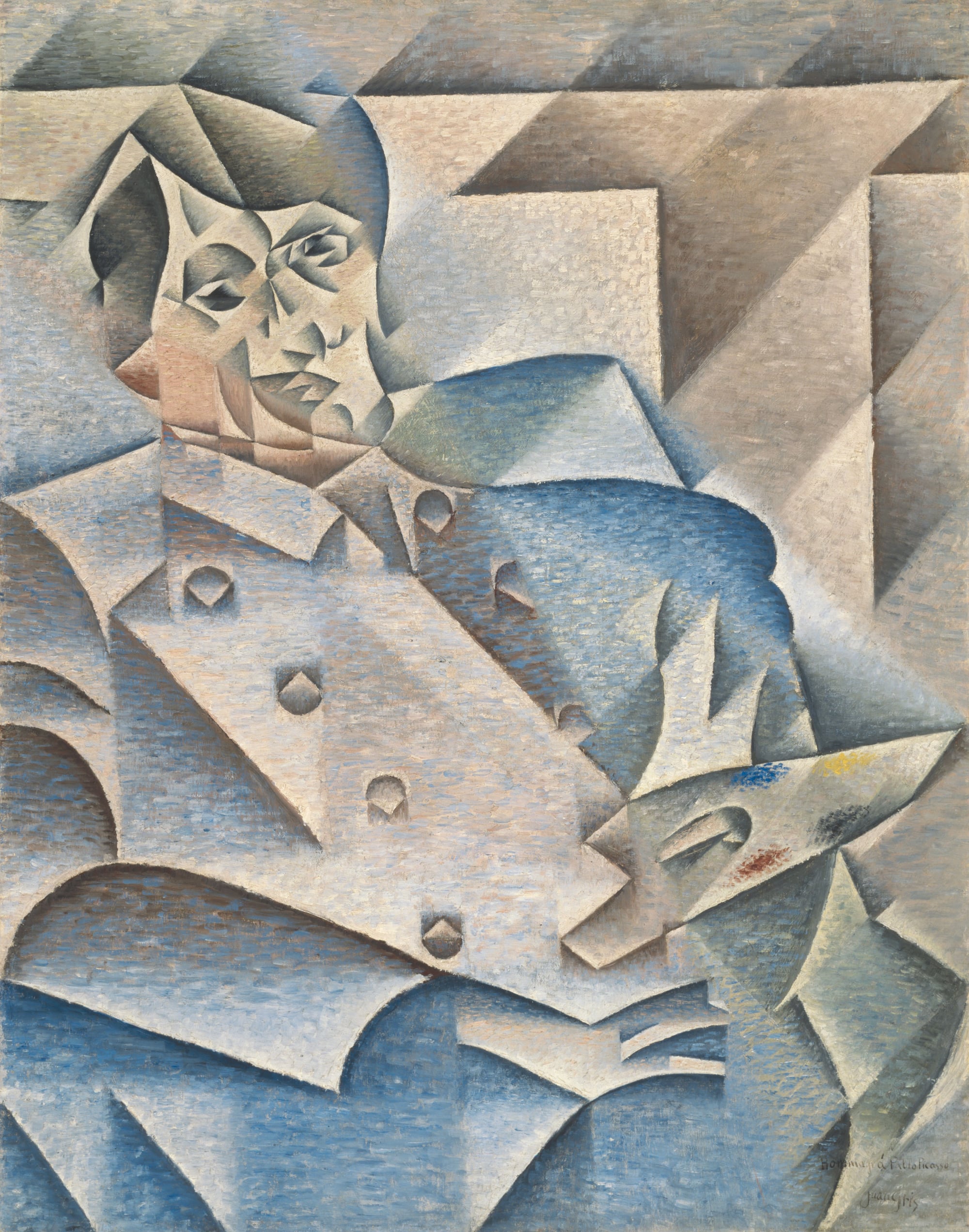
Cubism is a style of art that began in Paris, France, around 1907. Two artists started it: Pablo Picasso from Spain and Georges Braque from France. Cubist artists broke objects into flat shapes and showed them from many sides at once. The style changed how people thought about art for the rest of the century.
Before Cubism, most painters tried to make pictures look real. They used shading and careful angles to make a flat canvas look like a window into the world. A bowl of fruit was painted from one spot, the way one person would see it.
Picasso and Braque tried something different. They asked a strange question. Why show only one side of a face or a guitar when a real object has many sides? In a Cubist painting, you might see the front and the side of a person at the same time. A table might tilt up so you can see its top and its legs together. Shapes are broken into flat patches that look a bit like cubes, triangles, and squares.
There were two main phases of Cubism. The first was called Analytical Cubism. Paintings from this phase used mostly brown and gray colors. Objects were broken into so many small pieces that they were hard to recognize. The second phase was called Synthetic Cubism. It used brighter colors and bigger shapes. Artists also began gluing things to their canvases, like newspaper, wallpaper, and bits of cloth. This new art form was called collage.
Cubism shocked many people at first. Some critics said the paintings looked like broken glass or messy puzzles. But other artists were excited. Cubism spread quickly across Europe. Painters, sculptors, and even architects started using its ideas. Famous Cubist artists included Juan Gris and Fernand Léger. The sculptor Alexander Archipenko brought Cubist ideas into three dimensions.
Cubism opened a door. Once artists saw that a painting did not have to copy the world, they tried hundreds of new styles. Abstract art, which uses shapes and colors without showing real objects at all, grew straight out of Cubism. So did many later movements in modern art.
Today, Cubist works hang in museums all over the world. Picasso's painting Les Demoiselles d'Avignon, finished in 1907, is often called the first Cubist painting. It is now one of the most famous artworks of the twentieth century. People still argue about whether it is beautiful, but almost everyone agrees it changed art forever.
Related
Last updated 2026-04-26