
Rat
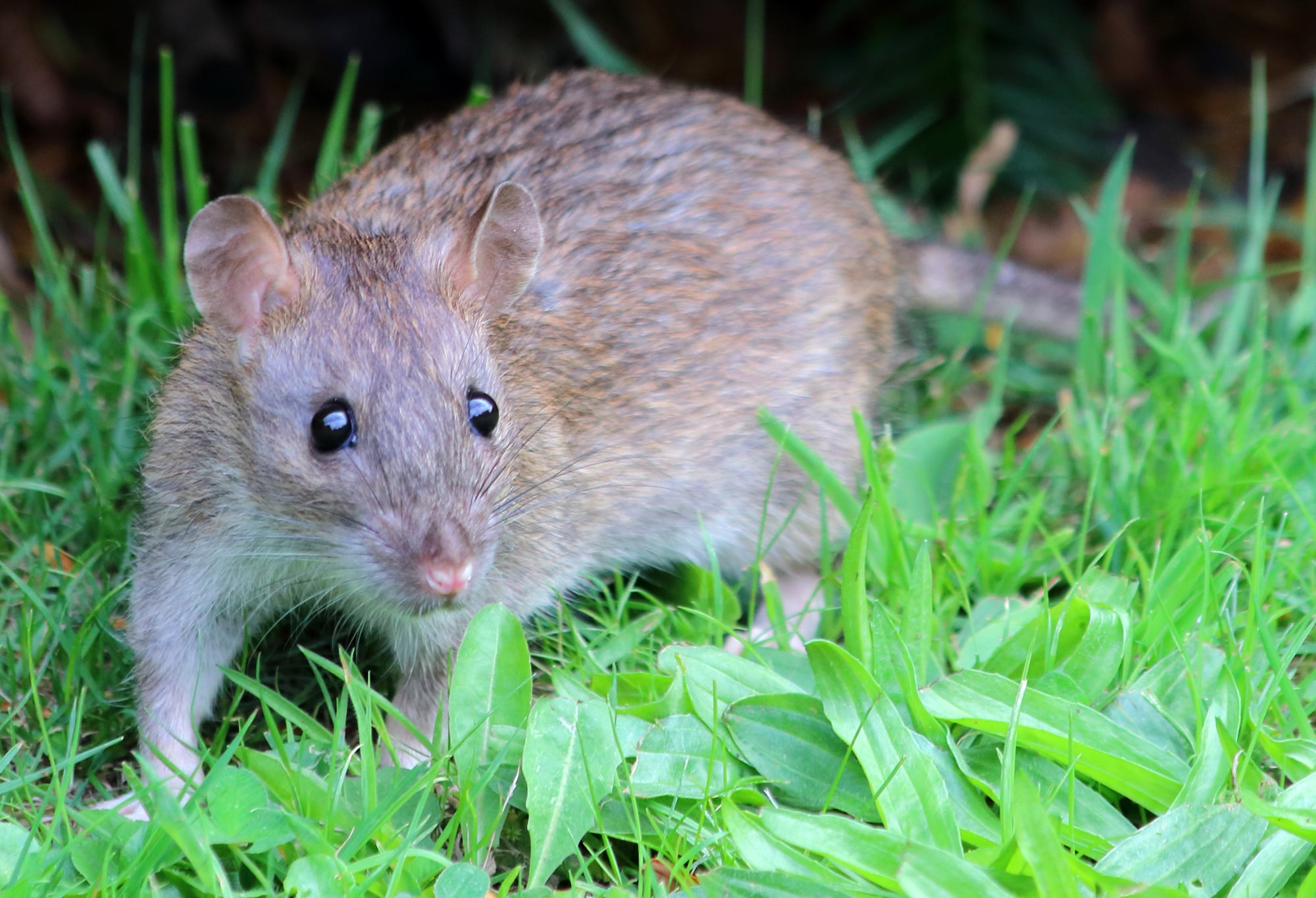
Credit: Dunpharlain · CC BY-SA 4.0
The rat is a medium-sized rodent found on almost every continent on Earth. Rats belong to the same animal family as mice, but they are bigger. An adult rat usually weighs between half a pound and one pound, with a body around nine inches long plus a long, nearly hairless tail. Rats have sharp front teeth that never stop growing. They must gnaw on things to keep those teeth worn down.
Two kinds of rats live almost everywhere humans do. The brown rat, also called the Norway rat, likes basements, sewers, and the ground. The black rat prefers to climb and often nests in attics or trees. Both kinds came from Asia thousands of years ago. They spread around the world by sneaking onto ships.
Rats will eat almost anything. In the wild, they eat seeds, fruit, insects, and small animals. In cities, they eat food scraps, garbage, and pet food. This is one reason rats do so well around people. Wherever humans leave food, rats can live.
Rats are also very smart. Scientists have found that rats can solve puzzles, remember paths through mazes, and even learn to drive tiny cars in laboratory experiments. They live in family groups and seem to care about each other. In one famous study, rats freed trapped cage-mates even when there was no food reward for doing it.
Rats have a mixed history with humans. In the 1300s, a disease called the Black Death killed about one-third of all people in Europe. For a long time, historians blamed black rats, because fleas living on the rats carried the sickness. Some modern researchers now argue that human fleas and lice spread the disease faster than rats did. The debate is still going on.
Rats have also helped humans in big ways. Laboratory rats have been used in science for more than 150 years. Medicines for heart disease, cancer, and many other illnesses were tested on rats before humans ever took them. In parts of Africa, giant pouched rats are trained to sniff out hidden landmines and to detect the germs that cause tuberculosis. They are too light to set off the mines, and they work for bananas.
A rat mother can have a litter of about a dozen babies every few weeks. Those babies can have their own babies at just five weeks old. That is why a few rats can turn into a big problem fast, and it is also why rats have followed humans into every corner of the world.
Last updated 2026-04-22