
Peregrine Falcon
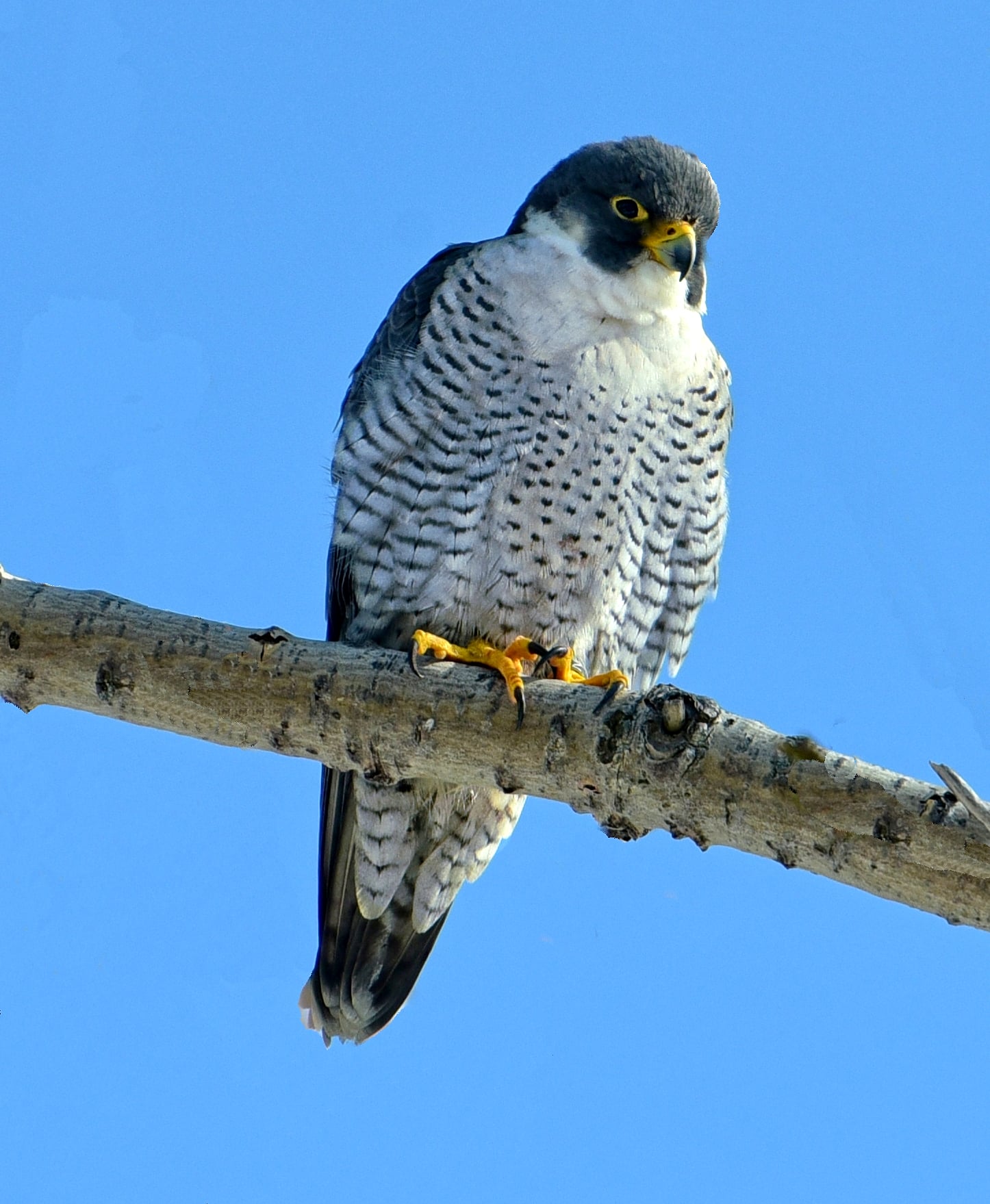
Credit: Mykola Swarnyk · CC BY-SA 3.0
The peregrine falcon is a medium-sized bird of prey found on every continent except Antarctica. It is a type of raptor, which means a bird that hunts other animals for food. Peregrines have blue-gray backs, pale chests with dark stripes, and a black mask of feathers around their eyes. Adults are about the size of a crow. Females are larger than males, weighing up to about two and a half pounds.
The peregrine is famous for one thing above all: speed. When it spots prey in the air, it climbs high and then folds its wings to dive. This dive is called a stoop. In a stoop, a peregrine can reach more than 240 miles per hour. That is faster than a race car and faster than any other animal on Earth. The falcon hits its prey, usually another bird, with closed feet. The blow often kills the prey instantly.
Peregrines have bodies built for this speed. Their nostrils have small bony bumps inside that slow down the rushing air so the falcon can still breathe. A clear third eyelid slides across each eye like a windshield wiper, keeping their vision sharp. Their eyesight is also about eight times stronger than a human's. A peregrine can spot a pigeon from over a mile away.
These falcons eat almost only other birds, from small songbirds up to ducks and geese. They hunt over open country, along coasts, and near water. The name "peregrine" means "wanderer," and some peregrines travel huge distances. Falcons that nest in the Arctic fly all the way to South America for the winter, a trip of more than 8,000 miles each way.
Peregrines almost disappeared in the 1900s. A pesticide called DDT got into the fish and small birds the falcons ate. DDT made their eggshells so thin that the eggs cracked before chicks could hatch. By the 1970s, peregrines were gone from most of the eastern United States. After DDT was banned in 1972, scientists raised young falcons in captivity and released them into the wild. The birds came back strongly, and in 1999 the peregrine was taken off the U.S. endangered species list.
Today many peregrines live in cities. Skyscrapers and bridges work like cliffs, and cities are full of pigeons to hunt. Pairs now nest on tall buildings in New York, Chicago, London, and Tokyo. Some cities set up live cameras on the nests so anyone can watch the chicks grow up.
Last updated 2026-04-22