
Kangaroo
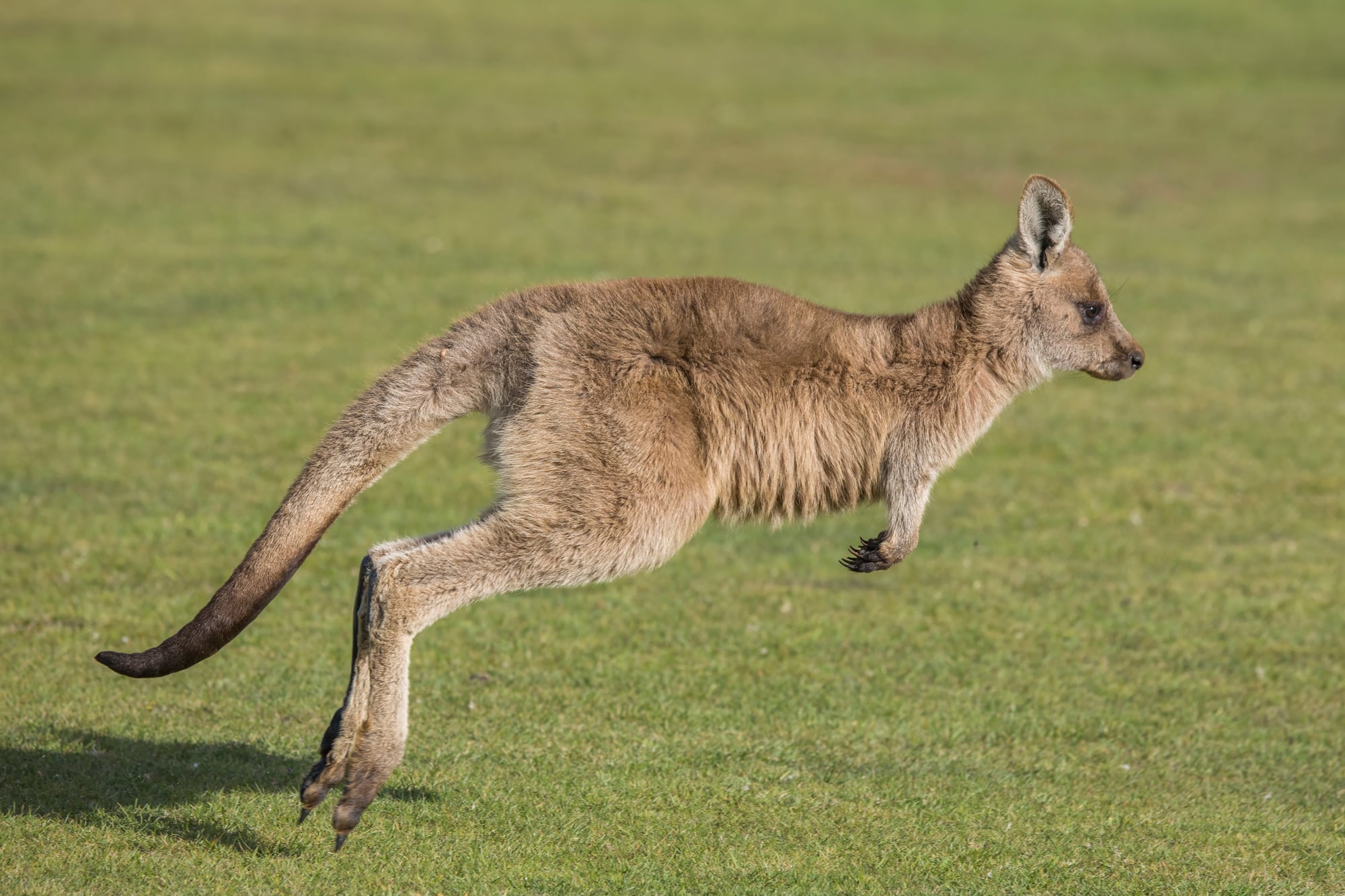
Credit: Charles J. Sharp · CC BY-SA 4.0
The kangaroo is a large mammal that lives in Australia. It belongs to a group of animals called marsupials, which carry their babies in a pouch. Kangaroos are famous for hopping on two strong back legs. They are the biggest animals in the world that move this way. There are four main species: the red kangaroo, the eastern gray, the western gray, and the antilopine kangaroo.
The red kangaroo is the largest. A big male can stand over six feet tall and weigh almost 200 pounds, about the size of a grown man. Kangaroos have small front paws, thick back legs, and a long, heavy tail. The tail works like a third leg. When a kangaroo stands still, it leans back on its tail for support. When it fights, it can balance on its tail and kick with both back feet at once.
Hopping is a kangaroo's main way of moving. A red kangaroo can hop 25 miles per hour and clear 25 feet in a single leap. That is longer than a school bus. Hopping uses less energy than running because the tendons in a kangaroo's legs work like springs. Each bounce stores energy for the next one.
Kangaroos are plant eaters. They munch grass, leaves, and small plants, mostly in the early morning and evening. During the hot part of the day, they rest in the shade. Kangaroos live in groups called mobs. A mob can have ten animals or more, and members take turns watching for danger.
A baby kangaroo is called a joey. When it is born, it is the size of a jellybean, pink, hairless, and blind. It crawls up its mother's belly and into her pouch, where it drinks milk and grows for about six months. Even after it leaves the pouch, a joey often jumps back in when it is scared.
Kangaroos are a symbol of Australia, and they appear on the country's coat of arms along with the emu. Both animals were chosen partly because neither can easily walk backward, which Australians say stands for moving forward as a nation. There are tens of millions of kangaroos in Australia today, more kangaroos than people. In some years, they are so common that they damage farms and crops, and the government allows hunters to control the numbers. Few wild animals have moved so smoothly between being a national treasure and a farmer's problem.
Related
Last updated 2026-04-22