
Alpaca
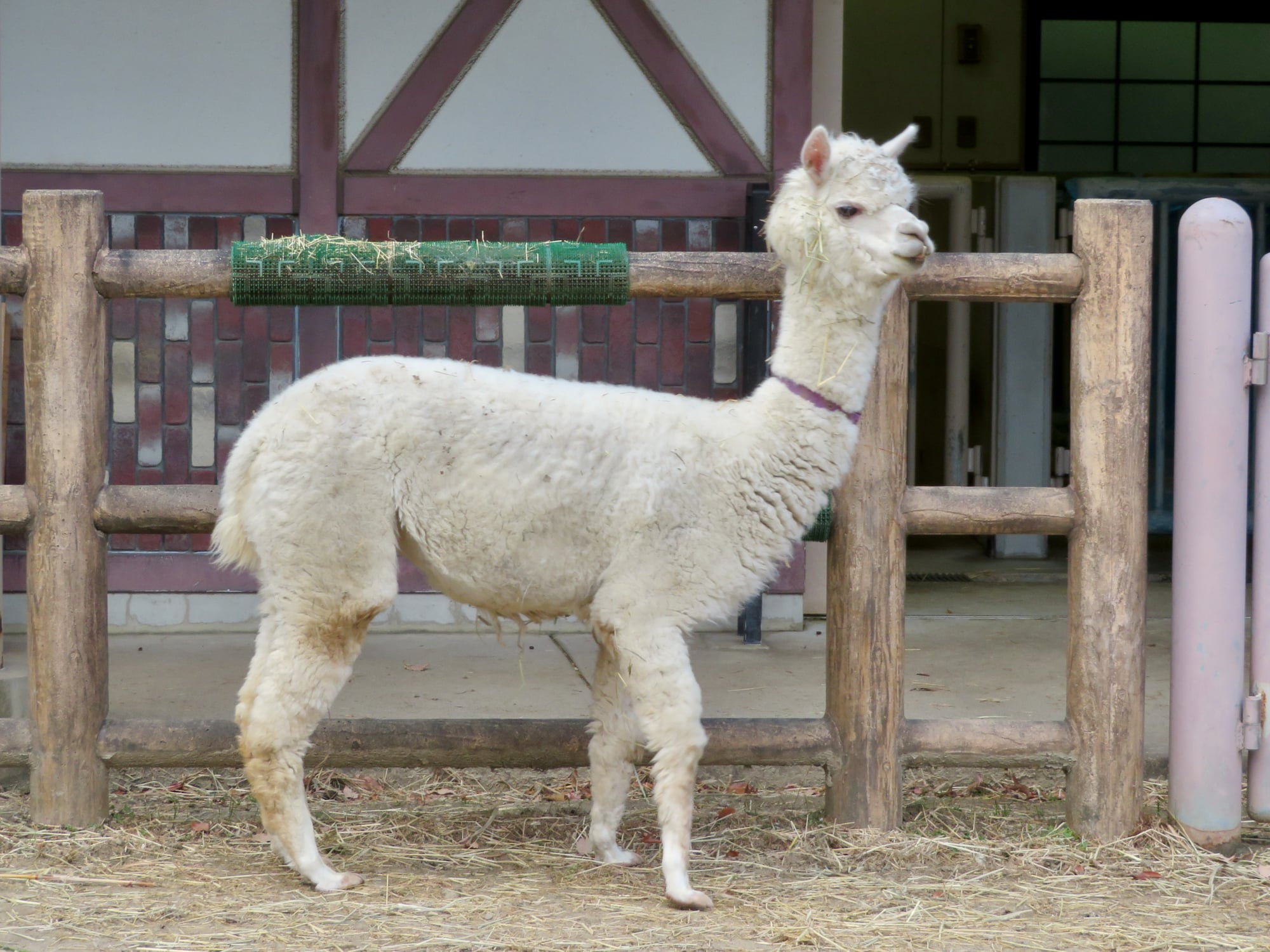
Credit: KKPCW · CC BY-SA 4.0
The alpaca is a fluffy farm animal that lives in the mountains of South America. It is a close relative of the llama, the camel, and the wild vicuña. Alpacas stand about three feet tall at the shoulder and weigh between 100 and 200 pounds, which is a little smaller than an adult human. They have long necks, big dark eyes, and thick soft fleece that covers almost their whole body.
Alpacas were first raised by people in the Andes Mountains of Peru about 6,000 years ago. That is long before the Inca Empire, and even before the pyramids of Egypt were built. The Inca people called alpaca fleece "the fiber of the gods." Only royalty were allowed to wear clothing made from the softest kind.
There are two breeds of alpaca. The Huacaya has thick, crimped fleece that makes the animal look like a walking cloud. The Suri has long, silky fleece that hangs down in ropes. Both types produce some of the warmest, lightest fiber in the world. Alpaca fleece is warmer than sheep wool and does not itch. A single alpaca grows about five to ten pounds of fleece each year, and it is sheared off in the spring.
Alpacas are herd animals. They get very stressed if they live alone, so farmers almost always keep at least two or three together. They eat grass and hay, and they do not need much food for their size. A whole herd can graze happily on a single acre of pasture.
Alpacas are usually calm and gentle, but they have one famous defense. When an alpaca is upset, it spits. The spit is a mix of grass, stomach juice, and saliva, and it smells terrible. Alpacas mostly spit at each other to settle arguments over food. They rarely spit at people unless they feel cornered.
Alpacas make a soft humming sound almost constantly. Mothers hum to their babies, called crias, and crias hum back. Scientists think the hum is a way alpacas stay connected to their herd, but the full meaning of the sound is still a mystery.
Today there are more than four million alpacas in the world. Most still live in Peru, Bolivia, and Chile, but farmers now raise them in the United States, Canada, Australia, and many other countries. Their fleece is sold to make sweaters, socks, blankets, and scarves, carrying a tradition from the high Andes into closets around the world.
Related
Last updated 2026-04-22